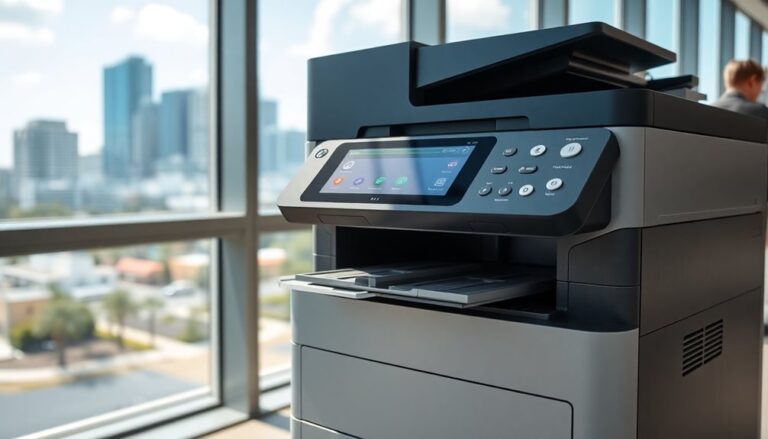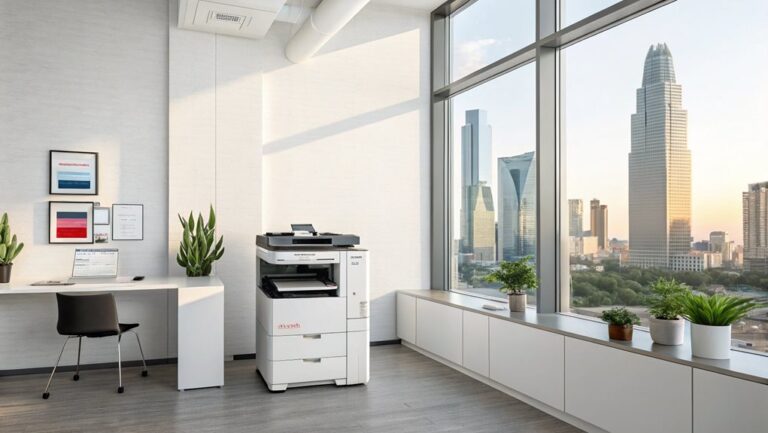

All-in-one printers combine printing, scanning, copying, and faxing capabilities in a single device, saving you both money and space. You’ll spend $150-$400 initially but enjoy reduced maintenance costs, 30-40% lower energy bills, and 50% paper savings through duplex printing. These multifunctional printers offer wireless connectivity, mobile printing options, and direct cloud integration for seamless workflow. Quality options range from standard text documents (600 dpi) to photo-quality prints (4800+ dpi). Exploring specific features will help you select the perfect match for your needs.
Expert Highlights
- All-in-one printers combine printing, scanning, copying, and faxing functions into a single device, saving 60% of desk space.
- These devices cost $150-$400, offering significant maintenance savings from servicing just one machine instead of multiple units.
- Built-in wireless capabilities support cloud printing and mobile integration from smartphones and tablets via dedicated apps.
- Energy-efficient features reduce electricity consumption by 30-40%, with ENERGY STAR models saving $12-25 annually.
- Duplex printing cuts paper expenses in half, while ink tank systems significantly reduce plastic waste compared to traditional cartridges.
Cost Savings: Comparing All-in-One vs. Standalone Devices
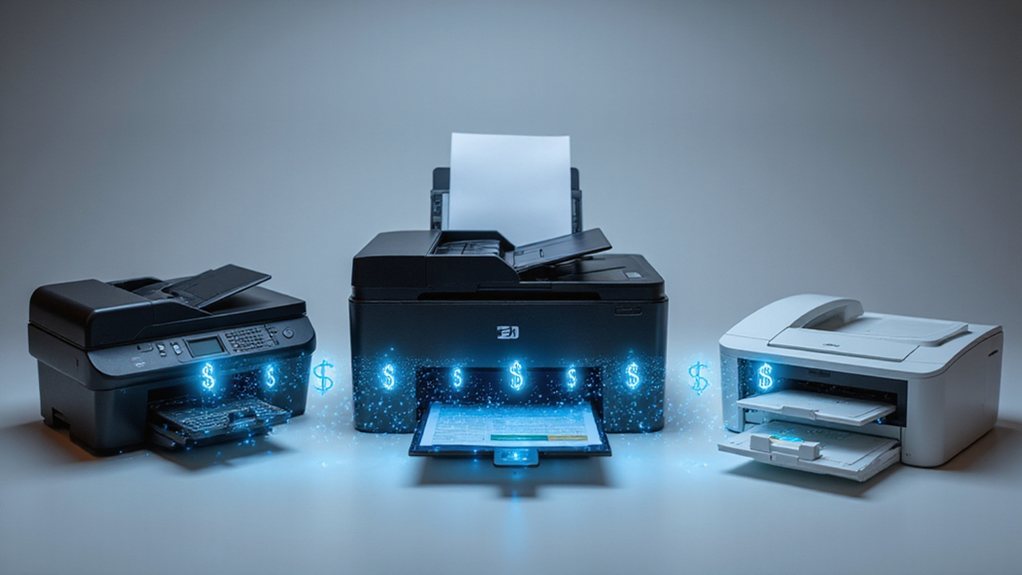
When considering the financial impact of your printing setup, all-in-one printers typically deliver significant cost savings compared to purchasing separate standalone devices. A complete printing station with individual scanner, copier, fax machine, and printer could cost you $800-$1,200, while a quality all-in-one unit ranges from $150-$400. You’ll also save on maintenance costs, as you’ll only need to service one machine instead of multiple devices.
Space constraints often create challenges in small home offices or apartments. All-in-one printers solve this problem by consolidating multiple functions into a single footprint, typically requiring 60% less desk space than separate units. Additionally, you’ll reduce energy consumption by powering just one device instead of several, potentially saving 30-40% on electricity costs associated with your printing equipment.
Space Efficiency and Office Organization

Space considerations extend beyond simple cost calculations when setting up your home or professional office. An all-in-one printer dramatically reduces your workspace footprint, eliminating the need for multiple machines sprawling across valuable desk or counter areas. When organizing your office environment, you’ll appreciate how these multifunction devices streamline your workflow while maximizing available square footage.
Consider these space-saving advantages:
- Reduced cable clutter with a single power cord and one network connection instead of multiple for separate devices
- Versatile placement options allowing positioning in corners or shared areas that wouldn’t accommodate multiple machines
- Simplified storage requirements for consumables like paper and toner/ink, as you’ll maintain supplies for one device instead of several
This efficient use of space creates a more organized, productive environment while reducing visual distraction and creating room for other essential office equipment.
Key Features to Consider When Purchasing
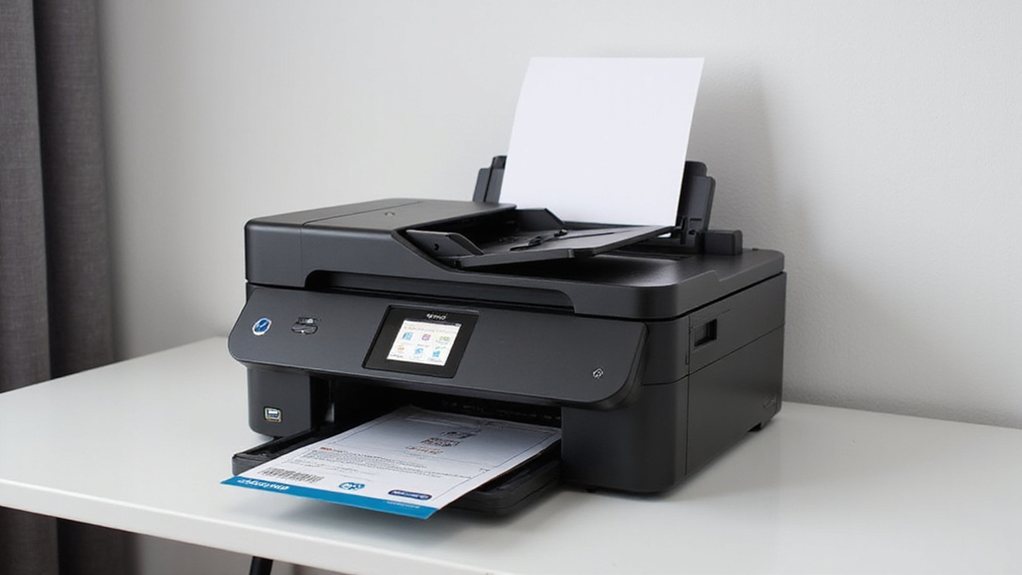
When shopping for an all-in-one printer, you’ll need to evaluate printing resolution options that match your specific needs, whether you’re printing basic documents or high-quality photos. You should also consider scanning capabilities, including resolution, speed, and whether the device offers automatic document feeding for multi-page scanning tasks. Additionally, check the printer’s connectivity and compatibility features to guarantee it works seamlessly with your existing devices, including support for Wi-Fi, Bluetooth, cloud printing, and compatibility with Windows, macOS, iOS, or Android systems.
Printing Resolution Options
Although many shoppers focus on speed and wireless capabilities, printing resolution represents one of the most essential factors that determines your all-in-one printer’s output quality. Resolution, measured in dots per inch (dpi), directly impacts the clarity and detail of your documents and photos. When comparing options, consider these resolution standards:
- Standard resolution (600 x 600 dpi) – Sufficient for everyday text documents and basic graphics with acceptable sharpness
- Medium resolution (1200 x 1200 dpi) – Delivers crisp text and professional-quality business documents with enhanced detail
- High resolution (4800 x 1200 dpi and above) – Produces photo-quality prints with smooth color gradients and fine details
You’ll need to balance your resolution requirements with budget constraints, as higher resolution printers typically cost more and use additional ink to achieve their superior output quality.
Scanning Capabilities
Beyond print resolution, a truly versatile all-in-one printer must excel at capturing documents and images through its scanning functionality. When evaluating scanners, you’ll want to take into account both optical resolution (measured in dpi) and color depth (typically 24-bit or 48-bit). Higher specifications yield more detailed digital reproductions, especially important if you’re archiving photos or creating high-quality copies.
Many users struggle with scanning thick materials like books. Look for models with removable lids or those that can accommodate bulkier items. Auto-document feeders save significant time when processing multi-page documents, while duplex scanning captures both sides simultaneously. Some advanced models offer optical character recognition (OCR), converting your scanned text into editable documents. This feature transforms physical paperwork into digital files you can edit, saving you from retyping entire documents.
Connectivity and Compatibility
In today’s connected world, your printer’s ability to communicate with all your devices defines its real-world utility. Modern all-in-one printers offer multiple connectivity options that determine how seamlessly they’ll integrate into your existing technology ecosystem.
When evaluating connectivity features, consider these critical elements:
- Wireless capabilities – Look for dual-band Wi-Fi, Wi-Fi Direct, and cloud printing options that allow printing from anywhere without physical connections
- Mobile compatibility – Ascertain support for Apple AirPrint, Google Cloud Print, or manufacturer-specific apps that enable printing directly from smartphones and tablets
- Peripheral connections – USB ports, memory card readers, and Ethernet jacks expand functionality and provide backup connection methods when wireless isn’t available
Compatibility issues can render an otherwise excellent printer frustrating to use, so verify your devices’ operating systems work with your prospective printer before purchasing.
Connectivity Options and Mobile Integration
Modern all-in-one printers offer extensive connectivity options that let you print from smartphones, tablets, and computers without physical connections. You’ll benefit from wireless technologies like Wi-Fi Direct and Bluetooth that enable seamless printing from multiple devices, regardless of where you’re located in your home or office. Access to cloud services such as Google Drive, Dropbox, and OneDrive further enhances your printing experience, allowing you to print documents directly from online storage without first downloading them to your device.
Multi-device Wireless Printing
While traditional printers required physical connections to a single computer, today’s all-in-one printers offer remarkable wireless capabilities that transform how you interact with your printing technology. You’ll appreciate the flexibility to print from virtually any device in your home or office without the hassle of cables or dedicated connections.
Multi-device wireless printing provides three key advantages:
- Convenience – Print directly from smartphones, tablets, laptops, or desktops without switching cables or transferring files between devices
- Efficiency – Send documents to your printer from anywhere in your home, even when you’re in another room
- Collaboration – Allow multiple family members or colleagues to access the same printer simultaneously, eliminating the need to share a single computer
Cloud Service Access
Today’s all-in-one printers elevate your printing experience by seamlessly integrating with popular cloud services, giving you unprecedented access to your documents from virtually anywhere. You’ll connect directly to Google Drive, Dropbox, OneDrive, and other platforms without needing a computer as intermediary. This eliminates the frustration of transferring files between devices before printing.
The integration process is straightforward—simply link your accounts through the printer’s setup menu or companion app. Once connected, you can browse, select, and print your cloud-stored documents directly from the printer’s touchscreen interface. For businesses, this means team members can access and print shared resources without emailing attachments or using flash drives. You’ll also appreciate the ability to scan documents directly to cloud folders, creating an efficient digital workflow that bridges physical and digital document management.
Print Quality and Performance Metrics
When evaluating all-in-one printers for your home or office, print quality and performance metrics should stand at the forefront of your decision-making process. These measurements directly impact your documents’ professional appearance and your workflow efficiency. Understanding key performance indicators helps you avoid disappointment after purchase.
Look for these essential metrics when comparing models:
- Resolution (DPI) – Higher numbers (1200×1200 DPI or above) deliver sharper text and more detailed images, especially vital for photo printing
- Print speed (PPM) – Faster pages-per-minute ratings reduce waiting time for large documents, with business-class models offering 20+ PPM
- Color accuracy (gamut) – Wider color gamuts reproduce more faithful images with vibrant, true-to-life colors for marketing materials
You’ll notice immediate quality differences in professional presentations, client-facing documents, and photo reproductions when choosing a printer with superior metrics.
Environmental Impact and Energy Efficiency
Beyond print performance, today’s printer buyers must contemplate the environmental footprint of these devices. When you’re shopping for an all-in-one printer, look for ENERGY STAR certification and eco-friendly features that reduce electricity consumption and waste.
| Feature | Environmental Impact | Cost Savings |
|---|---|---|
| Auto-shutdown | Reduces standby power use by 70% | Saves $12-25 annually |
| Duplex printing | Decreases paper consumption by 50% | Cuts paper expenses in half |
| Recycled cartridges | Diverts 2-3 lbs of plastic from landfills | Often 15-30% cheaper than new |
You’ll also want to reflect on toner vs. ink efficiency. Laser printers typically generate less waste over time, while newer ink tank systems dramatically reduce plastic waste compared to traditional cartridges. Many manufacturers now offer cartridge recycling programs, making it easier to minimize your printing’s environmental impact.
Frequently Asked Questions
How Long Do Ink Cartridges Typically Last in All-In-One Printers?
Your ink cartridges typically last 250-500 pages, depending on what you’re printing. Color cartridges run out faster than black ones. You’ll need replacements sooner if you print frequently or use high-quality settings.
Can All-In-One Printers Handle Specialty Paper and Cardstock?
Yes, you’ll find most all-in-one printers can handle specialty paper and cardstock. Check your model’s specifications for maximum thickness limits before printing to avoid jams or damage.
What Is the Average Lifespan of an All-In-One Printer?
You’ll typically get 3-5 years from an all-in-one printer. With regular maintenance and moderate use, they can last longer, but print heads and components eventually wear out.
Are All-In-One Printers Suitable for High-Volume Business Printing?
All-in-one printers typically aren’t ideal for high-volume business printing. You’ll find they have smaller paper capacities, slower speeds, and higher per-page costs than dedicated business printers.
How Difficult Is It to Troubleshoot Common All-In-One Printer Problems?
Troubleshooting all-in-one printer problems isn’t too difficult. You’ll find most issues involve paper jams, connectivity, or ink. Many printers have self-diagnostic tools and online guides to help you.
Expert Final Thoughts
You’ve discovered how all-in-one printers can transform your workspace, saving money and valuable desk space while providing versatile functionality. When selecting your device, carefully weigh connectivity options, print quality, and environmental impact against your specific needs. By investing in the right all-in-one printer, you’ll streamline your workflow, reduce your carbon footprint, and enjoy the convenience of having multiple office tools integrated into one efficient machine.