
To choose the best copier for your office, we need to analyze your daily document workflow, including print volume and types. Consider Canon and Xerox for innovation, Ricoh and Konica Minolta for reliability, or HP for cost-effectiveness. Look beyond purchase price to evaluate total ownership costs including toner, maintenance, and energy consumption. Don’t forget to assess service response times and uptime percentages. Our detailed guide will help you make this critical business decision.
Expert Highlights
- Assess your workflow requirements including print volume, document types, and special features like mobile printing and finishing options.
- Compare reliability metrics across top brands like Canon (98.7% uptime), Xerox (99.1%), and Ricoh (98.5%) when making your selection.
- Calculate total cost of ownership beyond purchase price, including toner costs, energy consumption, and maintenance expenses.
- Evaluate service response times and local support availability, as they vary significantly between manufacturers.
- Consider environmental sustainability features and technology integration capabilities with your existing office systems.
Assessing Your Office’s Document Workflow Needs
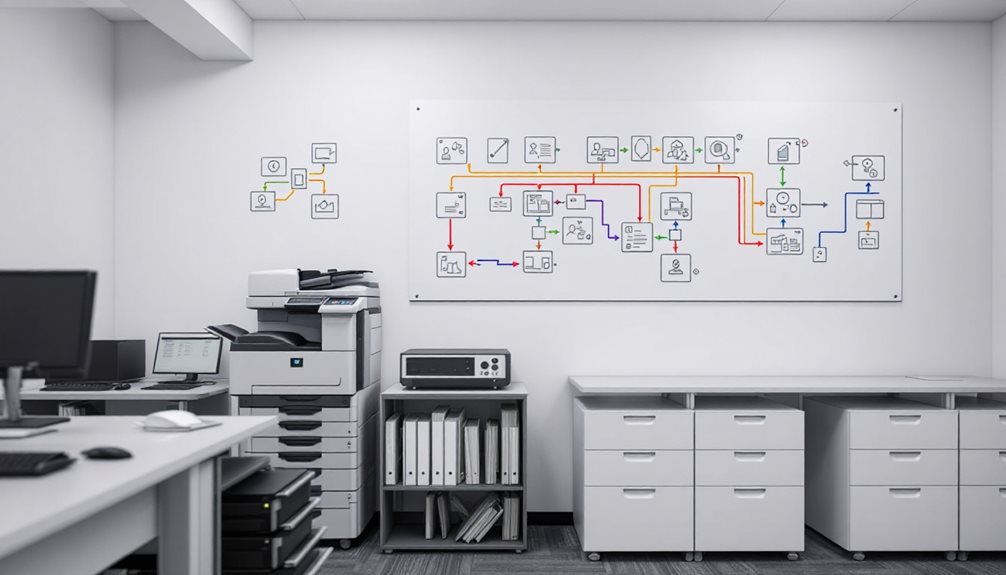
Before selecting a copier brand, we need to understand your office’s unique document requirements.
Start by analyzing your daily print volume and typical document types—are you primarily scanning, copying, or printing complex graphics?
Understanding your print volume and document complexities guides equipment selection for optimal workplace efficiency.
Consider your team’s workflow patterns.
Do employees need mobile printing capabilities?
Are documents routinely shared digitally after scanning?
Does your staff require advanced finishing options like stapling or booklet creation?
Also evaluate your security needs.
Some industries demand enhanced protection for sensitive information with features like secure print release or user authentication.
Your answers will narrow down which brands excel in addressing your specific workplace demands.
Top Copier Brands and Their Market Strengths
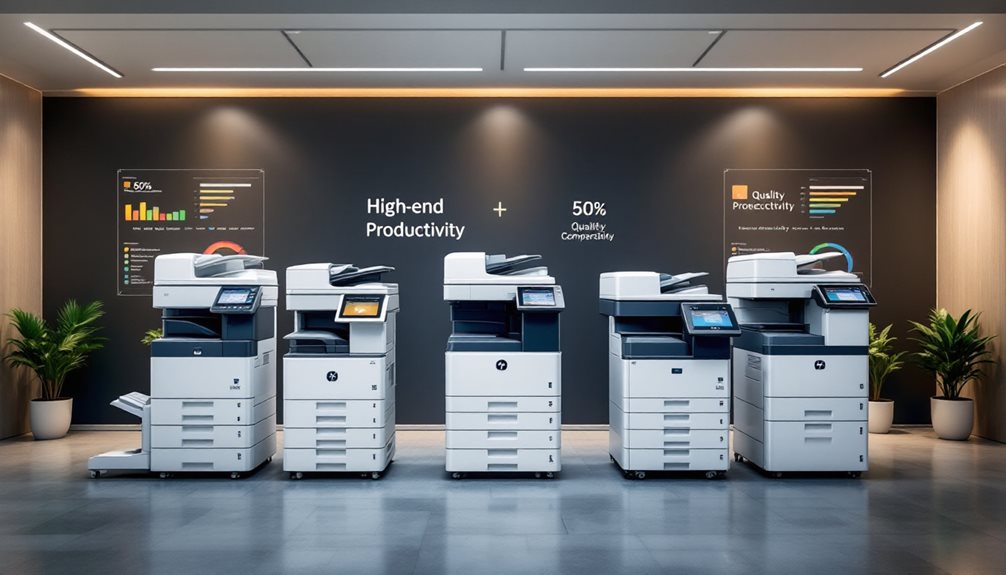
We’ll examine how industry leaders like Canon, Xerox, and HP maintain their market dominance through specialized service offerings and product reliability.
Each brand has carved out distinct niches, with some excelling in high-volume production environments while others offer superior solutions for small businesses or specialized industries.
Their innovation track records reveal consistent patterns of technological advancement, helping you identify which manufacturer is likely to provide the most future-proof investment for your specific needs.
Industry Leaders Analysis
When examining the copier industry landscape, several manufacturers consistently dominate the market through technological innovation, reliability, and exceptional service networks.
Canon and Xerox lead in innovation, with Canon excelling in image quality and Xerox pioneering networked document solutions.
Ricoh and Konica Minolta have built reputations for reliability and workflow integration, while HP dominates the small business segment with cost-effective multifunction devices.
Though larger players command attention, we’ve found Kyocera and Sharp gaining ground by offering lower total cost of ownership and eco-friendly designs that resonate with our community of environmentally conscious businesses.
Specialized Market Niches
While the major manufacturers compete across broad market segments, several brands have carved out specialized niches where they truly excel.
Kyocera has established dominance in eco-friendly solutions with long-lasting components and reduced waste.
For artistic industries, Canon offers superior color reproduction that design firms value. Small businesses often prefer Sharp for its space-saving designs and user-friendly interfaces.
In healthcare, Xerox stands out with HIPAA-compliant security features, while Ricoh leads in educational institutions with their specialized document management software.
Financial sectors trust Konica Minolta for their advanced security protocols.
Innovation Track Records
Beyond these specialized niches, a brand’s history of innovation often reveals its true competitive edge.
We’ve found that Canon consistently leads with imaging technology advancements, while Xerox maintains its legacy of document management innovation.
Ricoh excels in cloud integration and sustainability features that we’re all looking for in today’s eco-conscious workplace.
When we examine Konica Minolta, their AI-driven workflow solutions stand out.
Sharp’s focus on security innovations makes them a favorite among our colleagues in data-sensitive industries.
Together, let’s consider how these innovation patterns align with where your business is headed, not just where it stands today.
Key Features That Separate Premium Copiers From Basic Models
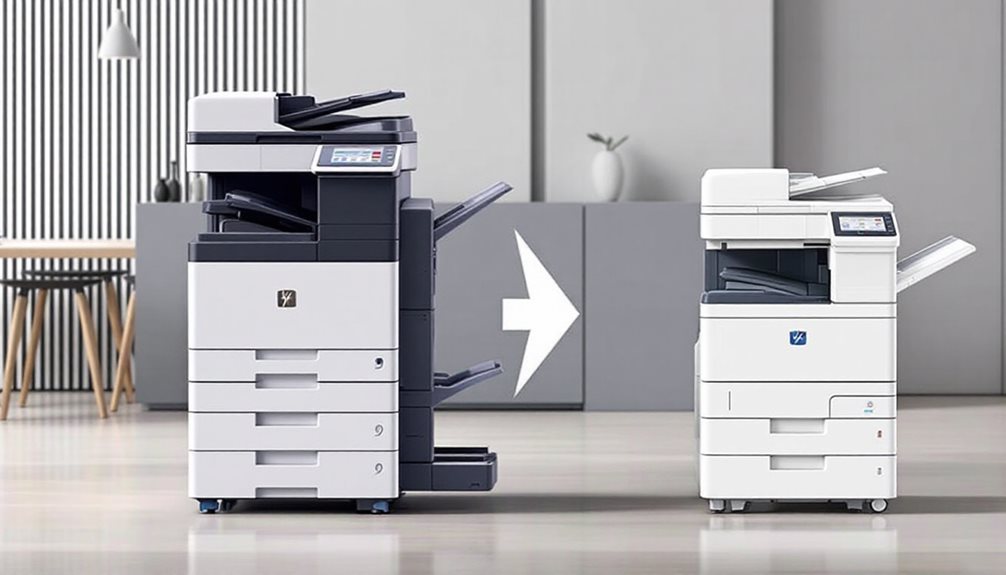
The distinction between premium and basic copier models lies in their advanced capabilities that deliver true value to busy offices.
We’ve found that premium copiers offer robust security features including user authentication and encrypted hard drives—essential for protecting sensitive documents.
Higher-end models provide sophisticated finishing options like stapling, hole-punching, and booklet creation, eliminating the need for additional equipment. They also feature faster processing speeds, larger paper capacities, and advanced color management tools.
What truly sets premium copiers apart is their integration with cloud services and mobile printing, enabling our teams to work seamlessly across devices—a necessity in today’s connected workplace.
Total Cost of Ownership Beyond the Purchase Price
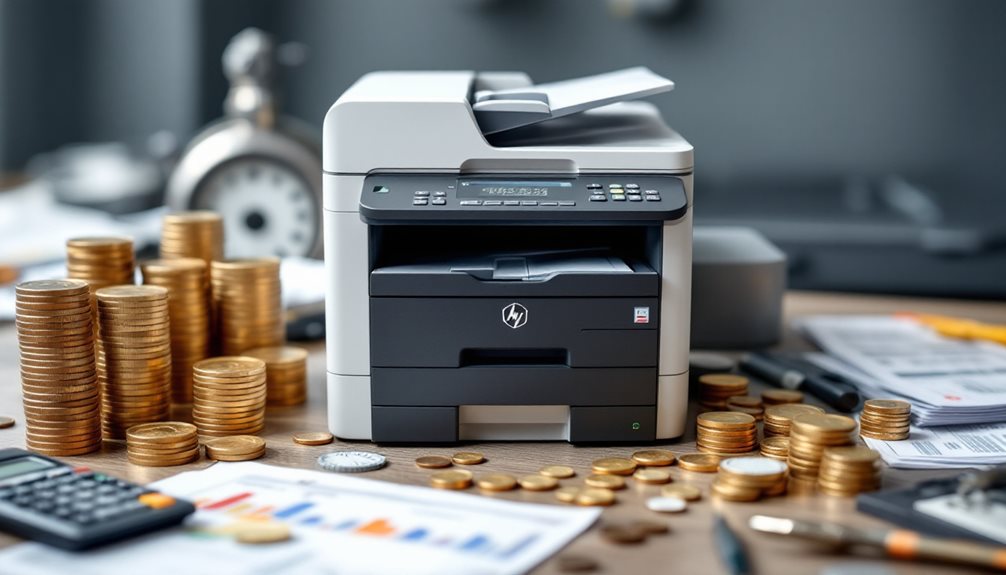
When selecting a copier brand, we must consider hidden operational costs like toner, maintenance, and energy consumption that can far exceed the initial purchase price.
Service contracts offer valuable protection against unexpected repair expenses and typically include regular maintenance to extend your machine’s lifespan.
We’ll help you analyze these ongoing expenses to determine the true cost of ownership for popular copier brands in today’s market.
Hidden Operational Costs
Purchasing a copier represents only the tip of the financial iceberg when considering the true cost of ownership. We often overlook hidden operational expenses that accumulate over a machine’s lifetime. These costs can greatly impact your office budget.
| Hidden Cost | Impact | Prevention Strategy |
|---|---|---|
| Toner waste | 15-30% overspending | Right-sized cartridges |
| Energy consumption | $100-300 annually | Energy Star models |
| Maintenance calls | $150-250 per visit | Preventative service plans |
| Downtime losses | $500+ per incident | Reliability ratings |
Let’s prioritize these factors when selecting our next copier brand. We’ll save thousands over the equipment lifecycle while avoiding those frustrating surprise expenses.
Service Contract Value
Most service contracts represent a significant portion of your copier’s total cost of ownership, often exceeding the initial purchase price over time.
We recommend evaluating contracts based on response time guarantees, parts coverage, and technician certifications.
The best value isn’t necessarily the cheapest option. Look for contracts that include preventative maintenance visits and remote monitoring capabilities.
These features help us avoid costly downtime in our workplaces.
When comparing brands, we should consider their reputation for honoring service agreements without hassle.
Some manufacturers excel at customer support while others may leave us waiting for days.
Reliability and Service Support Considerations
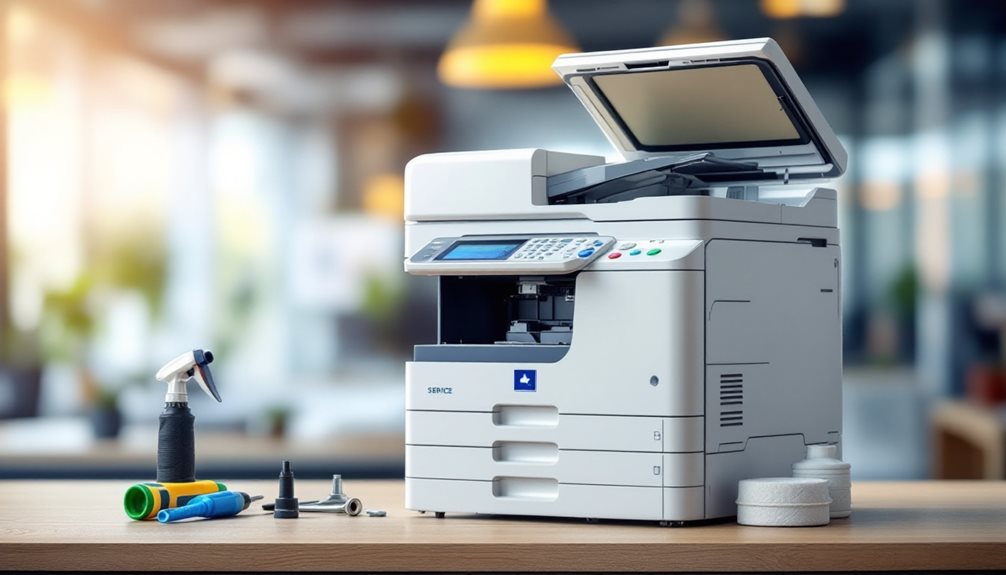
Since reliability directly impacts your workflow and productivity, evaluating a copier brand’s dependability and service support should be central to your purchasing decision.
We’ve analyzed the top brands based on their reliability metrics and support options to help you join the ranks of satisfied office managers everywhere.
| Brand | Average Uptime | Service Response | Local Support |
|---|---|---|---|
| Canon | 98.7% | 4-6 hours | Nationwide |
| Xerox | 99.1% | 2-4 hours | Major cities |
| Ricoh | 98.5% | Same day | Regional |
| Konica | 97.9% | Next day | Limited |
Environmental Impact and Sustainability Factors
Today’s environmentally conscious businesses recognize that copier choices greatly impact their carbon footprint. We recommend looking for ENERGY STAR certified models that consume less electricity during operation and standby modes.
Consider brands that offer recycled paper compatibility, automatic duplex printing, and toner-saving features. Many leading manufacturers now design machines with recyclable components and offer take-back programs for spent cartridges and end-of-life equipment.
The most sustainable brands prioritize manufacturing facilities powered by renewable energy and develop products with reduced packaging waste.
Frequently Asked Questions
How Long Should a Modern Office Copier Last Before Replacement?
We recommend replacing modern office copiers after 5-7 years. They’ll serve you well within this timeframe, but afterward, you’ll notice declining performance and increasing maintenance needs.
Can I Negotiate Maintenance Contracts With Authorized Dealers?
Yes, we can absolutely negotiate maintenance contracts with authorized dealers. They’ll often customize terms, response times, and pricing—especially when we’re looking at multi-year agreements or bundled services.
Are Refurbished Copiers a Reliable Alternative to New Machines?
We’ve found refurbished copiers can be reliable alternatives when purchased from reputable dealers. They’re budget-friendly with warranties, though they may have shorter lifespans than new machines. Always check their maintenance history.
How Do Wireless Printing Capabilities Affect Network Security?
Wireless printing opens potential vulnerabilities in our networks. We’d recommend setting up encrypted connections, unique passwords, and restricted access to guarantee we’re all protected while enjoying convenient printing options.
When Is Leasing a Better Option Than Purchasing Outright?
We’ll benefit from leasing when we’re tight on capital, need regular upgrades, want predictable monthly expenses, or appreciate included maintenance. It’s ideal for our growing business needs.