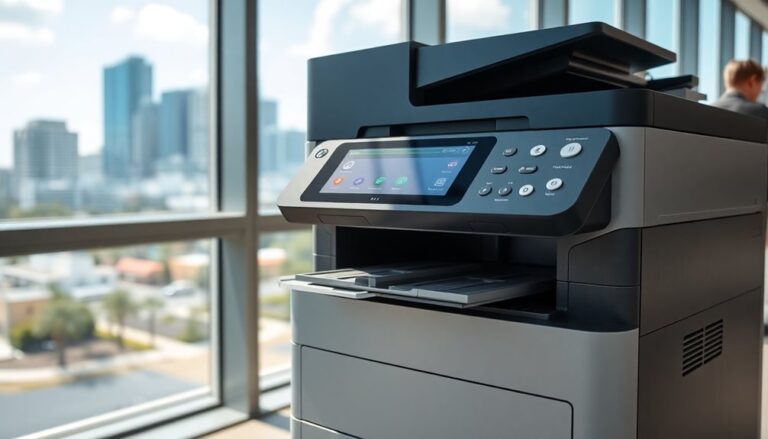

In today’s fast-paced business environment, selecting the right copier or multifunctional device (MFD) can greatly impact productivity and cost-effectiveness. The choice between laser and inkjet technologies, along with considerations for multifunctional capabilities and high-volume printing needs, presents a complex decision-making process for organizations. Understanding the strengths and limitations of each option is essential for aligning technology with specific business requirements. As we explore the nuances of these printing solutions, it becomes clear that the best choice depends on a variety of factors, including print volume, quality expectations, and budgetary constraints.
Laser Vs. Inkjet Technology

In the domain of printing technology, two primary methods dominate the market: laser and inkjet. These technologies cater to different needs and preferences within our printing community, each offering distinct advantages. MN Copier Services, a trusted office equipment provider, offers a range of both laser and inkjet printers, tailored to meet unique business requirements.
Laser printers utilize static electricity and toner to create sharp, precise text and graphics. They excel in high-volume environments, producing fast, cost-effective prints ideal for offices and businesses. Laser technology guarantees consistent quality across large print jobs, making it a reliable choice for professional printing needs.
Inkjet printers, on the other hand, spray tiny droplets of liquid ink onto paper. This method excels in producing vibrant colors and high-quality photo prints, making it a favorite among creative professionals and home users alike. Inkjet technology offers versatility, allowing us to print on various media types, including glossy photo paper and fabric transfers.
When choosing between laser and inkjet, consider factors such as print volume, color requirements, and media versatility. For those of us prioritizing speed and efficiency in document printing, laser technology is often the preferred choice. However, if our focus is on producing vivid images or working with diverse print materials, the benefits of inkjet printers may better serve our needs.
Multifunctional Device Features
Moving beyond the laser vs. inkjet debate, we now turn our attention to the extensive capabilities of Multifunctional Devices (MFDs). These versatile machines combine printing, copying, scanning, and faxing functions into a single unit, offering a thorough solution for modern offices. MFDs streamline workflows, save space, and reduce the need for multiple devices, making them an essential tool for businesses of all sizes.
Key features of MFDs include:
| Function | Benefit | Impact |
|---|---|---|
| Printing | High-quality output | Professional documents |
| Scanning | Digital archiving | Paperless efficiency |
| Copying | Quick reproduction | Improved productivity |
MFDs often come equipped with advanced features such as automatic document feeders, duplex printing, and network connectivity. These capabilities enable teams to collaborate more effectively, share resources, and work remotely. Additionally, many MFDs offer customizable user interfaces, security features, and mobile printing options, further enhancing their value in today’s dynamic work environments.
High-Volume Printing Solutions

Addressing the needs of businesses with substantial printing requirements, high-volume printing solutions offer robust capabilities designed for heavy workloads. Examples include models like the Ricoh IM C3510 and Xerox PrimeLink C9065/C9070, which are specifically engineered to handle large print jobs efficiently, ensuring minimal downtime and maximum productivity for organizations with demanding output needs.
High-volume printers and copiers typically feature faster print speeds, ranging from 70 to 150 pages per minute, and can handle a variety of paper sizes and weights. They often come equipped with high-capacity paper trays, holding thousands of sheets, and large-yield toner cartridges to reduce the frequency of replacements. Many models incorporate advanced finishing options such as stapling, hole-punching, and booklet-making, streamlining document production processes.
These solutions also prioritize reliability and durability, with components designed to withstand continuous use. Advanced monitoring systems alert users to potential issues before they occur, minimizing unexpected breakdowns. For organizations seeking to optimize their printing infrastructure, high-volume models often include sophisticated software for print management, cost tracking, and workflow automation. By investing in these powerful machines, businesses can appreciably enhance their printing capabilities and operational efficiency.
Cost and Efficiency Considerations
While high-volume printing solutions offer impressive capabilities, organizations must carefully weigh the cost and efficiency implications of their copier and MFD printer choices. Initial investment, ongoing maintenance, and consumables expenses all factor into the total cost of ownership. Laser printers typically have a higher upfront cost but lower per-page printing expenses, making them more economical for high-volume users. Additionally, a free assessment from local dealers can help organizations evaluate their printing needs, costs, and functional demands, ensuring they get the most suitable models.
Inkjet printers, conversely, are often less expensive to purchase but may incur higher long-term costs due to more frequent ink replacements. Energy efficiency is another vital consideration. Modern copiers and MFDs often come with energy-saving features, such as automatic sleep modes and duplex printing options, which can greatly reduce power consumption and paper waste. Additionally, the speed and capacity of the device should align with the organization’s workflow to avoid bottlenecks and maximize productivity.
Frequently Asked Questions
How Often Should I Replace the Drum in a Laser Printer?
Replacing a laser printer drum typically depends on usage, but it’s generally recommended every 12,000 to 50,000 pages. Many printers have drum life indicators. For ideal performance and print quality, follow your specific model’s guidelines for replacement intervals.
Can Inkjet Printers Produce Archival-Quality Prints for Long-Term Document Storage?
Inkjet printers can produce archival-quality prints suitable for long-term document storage. By using pigment-based inks and acid-free paper, we can create prints that resist fading and deterioration, ensuring our important documents remain preserved for years to come.
Are There Security Risks Associated With Networked Multifunctional Devices?
Yes, networked multifunctional devices can pose security risks. Our shared concern is protecting sensitive information. These devices may be vulnerable to unauthorized access, data breaches, and malware attacks if not properly secured and managed by our IT team.
What Environmental Factors Affect the Performance of High-Volume Printers?
Environmental factors greatly influence high-volume printer performance. Temperature, humidity, dust, and air quality can affect paper handling, print quality, and component longevity. Regular maintenance and climate control help guarantee ideal operation and consistent output for your team’s needs.
How Do I Properly Dispose of or Recycle Old Copiers and Printers?
To responsibly dispose of old copiers and printers, contact local recycling centers or manufacturers’ take-back programs. Many offer free recycling services for electronic waste. Alternatively, donate working devices to schools or non-profit organizations in your community.