
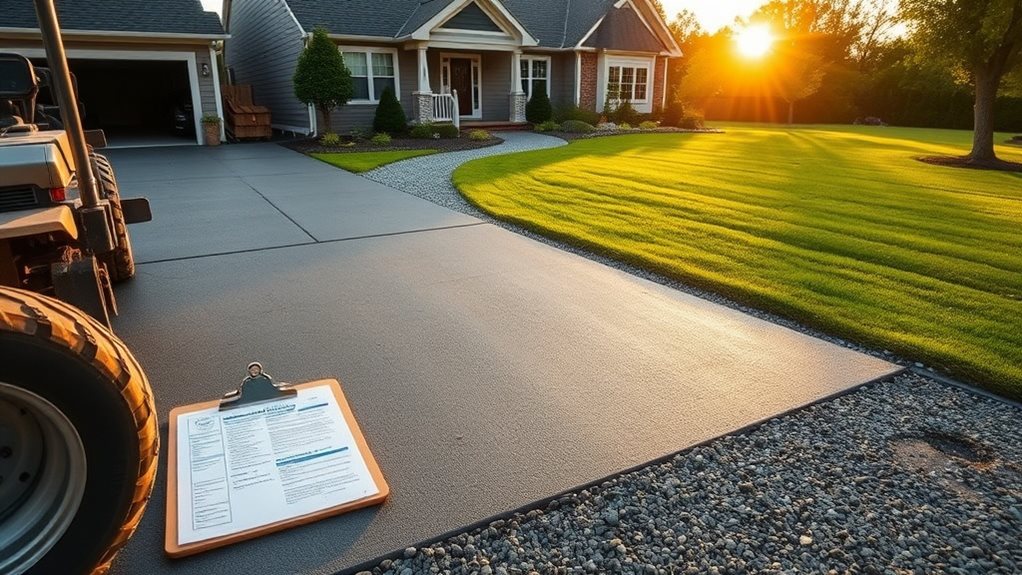
Southeastern homeowners contracting driveway installations should require specific material standards (minimum 3,000 PSI concrete), drainage solutions with 2% cross slopes, realistic timelines with weather contingencies, thorough warranties covering 2-10 years depending on materials, and proper subgrade preparation addressing regional clay soil challenges. Payment schedules should link to performance milestones, with no more than 30% upfront payment. Permits and inspection checkpoints must be clearly assigned to prevent liability issues. These contract elements protect long-term property value against unique regional challenges.
Expert Highlights
- Specify concrete strength of at least 3,000 PSI and require proper drainage solutions with a minimum 2% cross slope.
- Include soil testing requirements, removal of organic material, and installation of a 6-8 inch compacted base.
- Establish a realistic timeline with seasonal considerations and weather contingency plans for hurricanes and rainfall.
- Secure comprehensive warranty coverage for 2-5 years on asphalt and 5-10 years on concrete with clear defect policies.
- Structure payments in milestones with maximum 30% upfront, requiring contractor to obtain all necessary permits and pass inspections.
Material Specifications and Quality Standards

When selecting materials for driveway installation in the southeastern United States, homeowners must consider both aesthetic appeal and durability against the region’s specific climate challenges. High humidity, frequent rainfall, and seasonal temperature fluctuations can deteriorate improperly specified materials, leading to expensive repairs within just a few years.
Quality contracts should explicitly detail concrete strength ratings (minimum 3,000 PSI), aggregate size specifications, and proper reinforcement requirements. For asphalt installations, oil content and compaction standards must be clearly defined, while gravel driveways should specify stone type, size gradation, and required depth (typically 4-6 inches). The contract should reference ASTM standards for all materials and include provisions for subsurface preparation with proper drainage slopes (minimum 1/4 inch per foot) to prevent water pooling—a particular concern in the region’s heavy downpours.
Proper Drainage Solutions for Southeastern Rainfall

Nearly every southeastern homeowner will face significant drainage challenges due to the region’s intense rainfall patterns, which can exceed 50 inches annually in many areas. Without proper drainage solutions, these heavy downpours can undermine driveway foundations, create unsightly erosion channels, and potentially damage nearby structures.
Effective driveway contracts should specify a minimum 2% cross slope to direct water away from the home’s foundation. Additionally, contracts must include provisions for French drains, catch basins, or perimeter drainage systems where appropriate. Homeowners should insist on detailed grading plans that account for local soil conditions and existing water flow patterns. Proper drainage infrastructure might increase initial installation costs by 15-20%, but prevents expensive repairs that typically occur within 3-5 years of improper installation. These protective measures preserve both the driveway’s structural integrity and the property’s overall value.
Timeline and Weather Contingency Plans

A thorough driveway installation contract must include a realistic timeline with clearly defined milestones that account for the Southeast’s unique seasonal weather patterns. Homeowners should expect project schedules to incorporate ideal installation windows during drier months, typically late spring and early fall, when temperature and humidity levels promote proper concrete or asphalt curing. Every professional contract should contain detailed contingency provisions that address potential weather disruptions, including hurricane season delays, unexpected rainfall, or temperature extremes that could compromise material integrity and installation quality.
Project Milestones Schedule
Every successful driveway installation project relies on a clearly defined timeline with established milestones to guide the process from start to completion. Southeastern homeowners should insist that contractors include specific milestone dates for each phase: site preparation, form setting, material delivery, concrete pouring, finishing work, and final inspection. Without these benchmarks, projects often suffer from unnecessary delays and communication breakdowns.
A detailed milestone schedule should account for regional challenges like summer thunderstorms and high humidity periods that affect concrete curing. Contractors should provide contingency plans for each milestone, detailing how delays will be handled and communicated. Homeowners benefit tremendously from this structure, gaining visibility into project progression and maintaining leverage if deadlines slip. Require that your contract includes consequences for missed milestones without reasonable cause, such as partial refunds or discounted rates.
Seasonal Timing Considerations
Most southeastern driveway installations require strategic scheduling to navigate the region’s distinct seasonal challenges, especially during the humid summer months and unpredictable spring rainfall periods. Contracts should explicitly include weather contingency plans that address potential delays caused by extended rainfall, excessive heat, or unexpected frost that can compromise material curing.
Homeowners should insist on language that specifies ideal installation windows—typically fall and early winter when conditions are more stable—while establishing clear protocols for rescheduling. The contract must outline temperature thresholds (above 50°F for concrete pouring) and moisture parameters that would trigger work stoppages. Additionally, timing provisions should account for seasonal labor availability, as contractor schedules often become congested following storm seasons when repair work takes precedence over new installations, potentially extending project timelines by weeks or months.
Unexpected Weather Provisions
When southeastern homeowners face unexpected weather events, driveway installation contracts must contain robust contingency provisions that protect both parties from financial and scheduling complications. Proper weather contingency clauses establish clear parameters for delays, material storage, and financial responsibility when storms, excessive heat, or unexpected freezing conditions occur during installation.
- Automatic timeline extension provisions that specify how many additional days contractors may add per weather event
- Clear definitions of what constitutes “unsuitable weather conditions” (rainfall amounts, temperature thresholds)
- Protocols for securing and protecting materials during weather delays
- Financial responsibility clauses for additional costs incurred due to weather protection
- Communication requirements for weather-related delays, including notification timeframes and documentation
These provisions prevent disputes and guarantee your driveway installation progresses safely despite the Southeast’s unpredictable climate patterns.
Warranty and Guarantee Provisions
Southeastern homeowners should pay careful attention to warranty provisions when reviewing driveway installation contracts, as these clauses determine their protection against future issues. Standard warranties typically cover material defects and installation problems for 1-5 years, with concrete and pavers offering longer coverage periods (often 25+ years) than asphalt or gravel options (typically 1-3 years). The contract should clearly outline whether warranty rights can be transferred to new owners if the property is sold during the coverage period, a particularly important consideration in regions where severe weather patterns may accelerate driveway deterioration.
Warranty Duration Details
All standard driveway installations include a detailed warranty period of five years from the date of project completion, covering structural integrity and workmanship defects. Homeowners should understand that warranty duration may vary considerably between contractors, making careful review essential before signing any agreement. The most extensive warranties should clearly outline coverage timeframes for different components and potential issues.
- Material defects typically carry 1-2 year coverage, while structural elements may extend to 5-10 years
- Sealant and surface treatments often have shorter warranty periods of only 6-12 months
- Drainage system warranties generally last 2-3 years, requiring annual inspection to maintain validity
- Concrete cracking warranties differentiate between hairline cracks (1 year) and structural cracks (5 years)
- Extended warranty options may be available for an additional 10-20% of the project cost
Material Defect Coverage
Material defect coverage stands as the cornerstone of thorough driveway warranty protection for homeowners throughout the Southeast region. This vital provision specifically addresses failures caused by substandard materials rather than installation errors or natural wear. Southeastern homeowners face unique challenges with material defects due to extreme weather conditions—from scorching summers to occasional freezing temperatures—that can accelerate deterioration of inferior products.
When reviewing contracts, homeowners should ascertain coverage explicitly includes concrete cracking, premature aggregate exposure, and surface scaling. A detailed material warranty should outline both the manufacturer’s responsibility for providing replacement materials and the contractor’s obligation to perform necessary repairs at no additional cost. The ideal coverage period ranges from 2-5 years for asphalt and 5-10 years for concrete, with prorated terms clearly defined for claims made in later warranty years.
Transfer Rights Explained
Transfer rights frequently represent one of the most overlooked yet essential elements of driveway warranty protection for homeowners contemplating property sale or transfer. Understanding these provisions guarantees that the substantial investment in your concrete or asphalt driveway remains protected even after ownership changes hands. Without transferable warranty protection, new owners may face unexpected repair costs that could have been covered.
- Warranty transfer applications must typically be submitted within 30 days of property sale
- Most quality contractors offer transferable warranties for a modest processing fee ($50-$100)
- Non-transferable warranties can reduce property value by $1,000-$3,000 depending on driveway age
- Southeastern climate conditions make transfer rights particularly valuable due to moisture-related damage
- Request explicit language regarding secondary transfers to subsequent owners beyond immediate buyers
Homeowners should negotiate transfer provisions before signing, affirming documentation clearly outlines all procedures, limitations, and associated costs.
Subgrade Preparation and Soil Stability Requirements
Before beginning driveway installation, proper subgrade preparation and soil stability assessment must be completed to guarantee the long-term durability of your investment. The unique clay-heavy soils of the Southeast create significant challenges, including potential shifting and erosion during heavy rainfall events that can undermine a driveway’s foundation.
Your contract should explicitly require contractors to conduct soil testing, remove all organic material, and install a properly compacted base of crushed stone at least 6-8 inches deep. Southeastern homeowners should insist on drainage provisions that address the region’s high precipitation, such as proper sloping (minimum 2% grade) and perimeter drainage systems. Without these specifications, even professionally installed driveways may crack, settle unevenly, or wash out during storms—resulting in costly repairs that could have been prevented through proper initial preparation.
Payment Schedule and Performance Milestones
Throughout the driveway installation process, a clearly defined payment schedule tied to specific performance milestones protects both homeowners and contractors from financial disputes while ensuring quality work. Southeastern homeowners should structure payments to maintain leverage throughout the project, never paying more than 30% upfront due to the region’s frequent contractor mobility issues and weather delays.
- Initial deposit (20-25%) upon contract signing to secure materials and labor
- Payment (25%) following successful subgrade preparation and compaction testing
- Progress payment (25%) after concrete forms and reinforcement installation
- Payment (15%) upon successful concrete pour and initial curing period
- Final payment (10-15%) after inspection, cleanup, and verification of proper drainage
Withholding this final payment incentivizes contractors to address any remaining issues promptly, particularly important in the Southeast where heavy rains can quickly expose improper installation techniques.
Permit Compliance and Inspection Checkpoints
Proper permit acquisition and inspection compliance serve as the legal foundation for any driveway installation project in the Southeast, where regulations vary considerably by county and municipality. Homeowners face significant liability risks when contractors skip required permits, potentially resulting in stop-work orders, fines, or forced removal of completed work.
Your contract should explicitly state the contractor’s responsibility to obtain all necessary permits and schedule required inspections at critical project milestones. Many southeastern jurisdictions mandate inspections for base preparation, form setting, and final completion. Consider including language that ties payment phases to successful inspection completions, creating accountability. Request copies of all permits and inspection documents for your records, which protects your interests during property sales and insurance claims. This documentation establishes that your driveway meets local building codes and stormwater management requirements.
Frequently Asked Questions
How Much Maintenance Will My Concrete Driveway Require?
Concrete driveways require minimal maintenance, typically just periodic cleaning, sealing every 3-5 years, and prompt crack repair to prevent moisture penetration and structural damage.
Can I Park Heavy Vehicles on My New Driveway?
Standard residential concrete driveways support most personal vehicles. Heavy trucks, RVs, or commercial equipment may require reinforced concrete with greater thickness and enhanced structural support.
How Long Before I Can Use My Newly Installed Driveway?
Homeowners should wait at least 7 days before driving on a new concrete driveway. For heavier vehicles, waiting 28 days guarantees full curing and maximum strength development.
Will the Concrete Color Match My Home’s Exterior?
Concrete color can be customized to match a home’s exterior. Homeowners should discuss color options with contractors before installation, possibly requesting samples to guarantee aesthetic harmony with existing structures.
What Decorative Options Are Available for Concrete Driveways?
Concrete driveways can be enhanced with stamped patterns, exposed aggregate, stenciling, staining, scoring lines, borders, and decorative inlays. These finishes allow homeowners to complement their property’s aesthetic while maintaining durability.
Expert Final Thoughts
A proper driveway installation contract protects southeastern homeowners from costly mistakes and future headaches. By requiring detailed specifications for materials, drainage, soil preparation, timelines, permits, payment schedules, and warranties, homeowners establish clear expectations and accountability. This extensive approach guarantees their investment withstands the region’s unique climate challenges while maintaining property value. Armed with this knowledge, homeowners can confidently navigate the driveway installation process and secure lasting results.