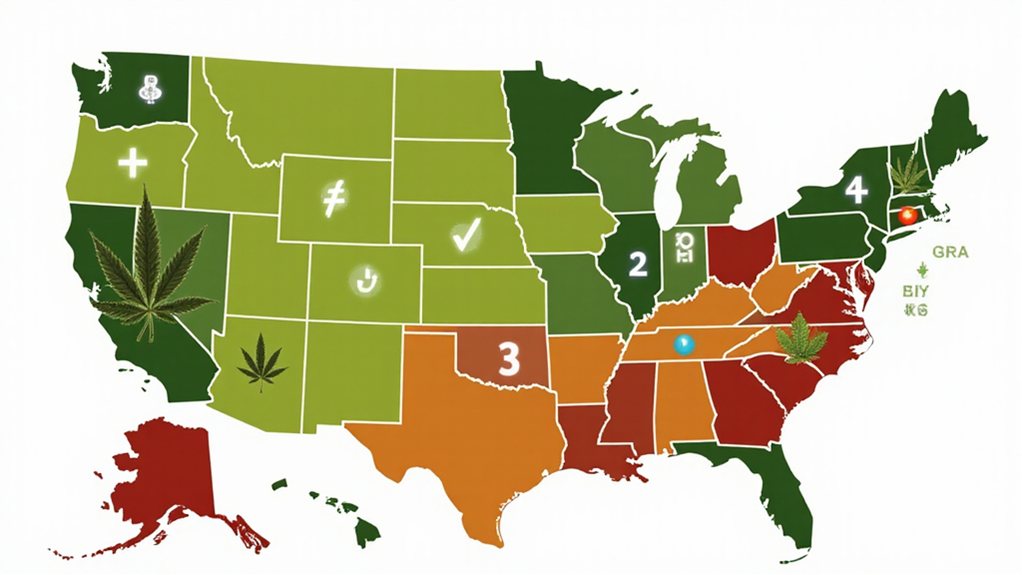
To navigate state cannabis laws effectively, you’ll need to research both federal prohibitions and your specific state’s regulations. Verify local possession limits, purchase restrictions, and usage guidelines, as these vary considerably between jurisdictions. Maintain strict compliance with seed-to-sale tracking if operating a business, and consider consulting cannabis-focused attorneys who understand the rapidly evolving landscape. Subscribe to regulatory newsletters and join industry associations to stay informed about legislative changes. The strategies that work today might require adjustment tomorrow.
Expert Highlights
- Stay informed about both federal and state cannabis laws, as federal prohibition still exists despite state legalization.
- Verify local possession limits, purchase restrictions, and municipal codes before traveling between jurisdictions.
- Consult with cannabis-focused attorneys who understand the nuances of state-specific regulations.
- Create a compliance tracking system to monitor regulatory changes across all relevant states.
- Subscribe to state cannabis regulatory newsletters and join industry associations for real-time updates on law changes.
What Federal Prohibition Means for State-Legal Cannabis
Despite cannabis legalization in many states, the federal government still classifies it as a Schedule I controlled substance, creating a complex legal paradox that affects businesses and consumers alike. This federal prohibition means you can’t transport cannabis across state lines, even between neighboring states where it’s legal. You’ll face serious limitations on banking services, as most financial institutions avoid cannabis businesses to prevent federal prosecution for money laundering. Additionally, you remain vulnerable to federal enforcement, particularly on federal properties like national parks and military bases.
To navigate these challenges, maintain strict compliance with your state’s regulations, work with cannabis-friendly financial services when available, and never cross state lines with products. Consider consulting with attorneys who specialize in cannabis law to protect yourself from the potentially severe consequences of federal prohibition.
Know Your State’s Cannabis Laws: A Practical Checklist
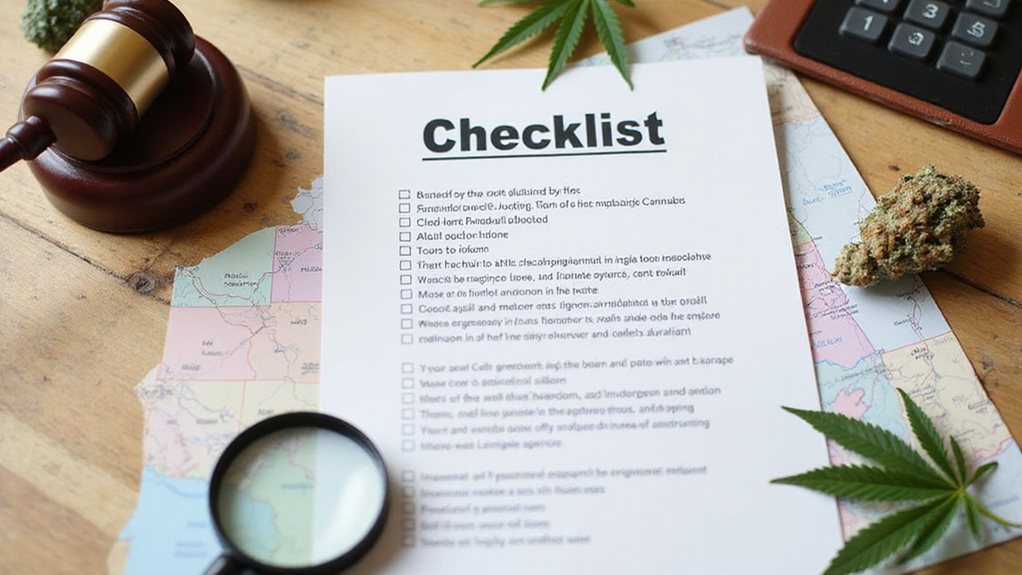
You’ll need to carefully review your state’s possession limits, as they can vary dramatically from allowing multiple ounces in some states to just a few grams in others. Even within cannabis-legal states, county and city regulations may create a patchwork of different rules that could make something legal in one town but illegal just a few miles away. Understanding these local variations isn’t just about legal compliance—it’s essential for avoiding potentially serious consequences like fines, property seizure, or even arrest in areas with stricter enforcement.
Possession Limits Matter
Three critical numbers govern your ability to legally possess cannabis in states where it’s permitted: the amount in weight, the number of plants you can grow, and the THC concentration percentage. Exceeding these limits can transform a legal activity into a criminal offense, potentially resulting in fines or even jail time.
To stay compliant with your state’s possession regulations:
- Keep detailed records of your cannabis purchases, including receipts that show weight and THC content
- Store cannabis in its original, labeled packaging whenever possible to verify legal amounts
- Use a small digital scale for home measurement if you transfer products to different containers
Remember that possession limits often differ based on whether you’re a recreational user or medical patient, with medical programs typically allowing higher quantities to address ongoing treatment needs.
Local Variations Exist
Even in states where cannabis has been legalized, municipal and county governments often create their own restrictions that can greatly impact what’s allowed in your specific location. You might be surprised to learn that while your state permits cannabis use, your city may have enacted “dry” zones where dispensaries can’t operate, stricter possession limits, or additional public consumption bans.
Before making any assumptions, contact your local government offices or review municipal codes online to understand the specific rules in your area. Many cities maintain dedicated cannabis information pages on their official websites. Some municipalities even require additional local permits for businesses or have unique zoning restrictions. Understanding these local variations will help you avoid unintentional violations and guarantee you’re fully compliant with all regulations that apply to your exact address.
Cannabis Limits You Need to Know: Possession, Purchase and Use
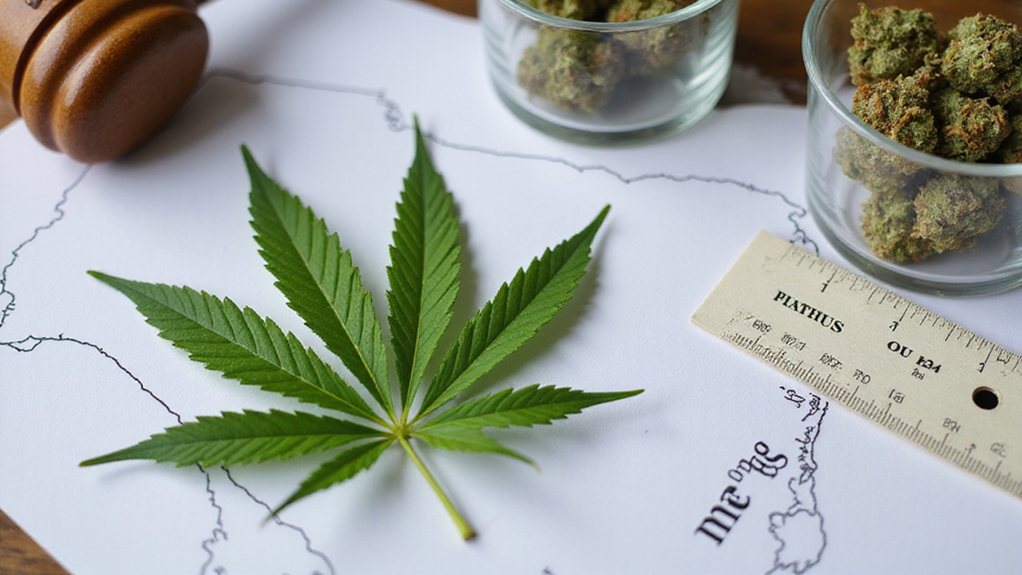
Every state with legal cannabis has established specific limits on how much you can possess, purchase, and use—and exceeding these boundaries can transform a legal activity into a serious criminal offense. Understanding these thresholds helps you avoid legal complications while enjoying cannabis responsibly within your state’s framework.
Most states structure their limits around these key measurements:
- Purchase limits – Often measured in ounces (typically 1-2.5 oz) or THC content for concentrates/edibles (5-8 grams)
- Possession limits – May differ from purchase limits and can vary based on location (private property vs. public spaces)
- Cultivation limits – If home growing is permitted, states restrict plant counts (usually 4-12 mature plants per household)
When traveling between jurisdictions, even within the same state, these limits can change dramatically, requiring vigilance and regular verification of local regulations.
Crossing State Lines: How to Avoid Legal Trouble With Cannabis
While understanding possession limits within your state is important, a more complex legal challenge arises when you travel between states with cannabis in your possession. Interstate transport of cannabis remains federally illegal, even between two legal states that share a border. You’ll face potential federal drug trafficking charges if caught.
To avoid legal trouble, never cross state lines with any cannabis products. Instead, purchase cannabis only after arriving at your destination state where it’s legal. Before traveling, consume or properly dispose of remaining products. Remember that airports fall under federal jurisdiction, making possession illegal even in terminals of cannabis-friendly states.
If you need cannabis for medical reasons while traveling, research your destination state’s reciprocity laws, which may honor your medical card from your home state.
How to Build Cannabis Business Compliance Across Multiple States
For cannabis businesses operating in multiple states, traversing the complex patchwork of differing regulations requires a strategic compliance framework that can adapt to each jurisdiction’s unique requirements. You’ll need to develop systems that scale across state lines while accommodating local variations in licensing, reporting, and operational standards.
To build effective multi-state compliance:
- Create a centralized compliance team that monitors regulatory changes across all jurisdictions, maintains an extensive database of requirements, and coordinates implementation of new policies throughout your organization.
- Implement adaptable inventory tracking systems that satisfy each state’s seed-to-sale monitoring requirements while maintaining consistent internal data architecture.
- Establish relationships with regulators and industry associations in each state where you operate, ensuring you receive advance notice of pending changes and can participate in shaping new regulations.
Cannabis in the Workplace: Rights for Employees and Employers
As recreational and medical cannabis legalization spreads across states, both employers and employees face unprecedented challenges managing workplace policies that balance legal cannabis use with safety and productivity concerns. You’ll need to understand that employers can still enforce drug-free workplace policies in most states, even where cannabis is legal. However, some jurisdictions now limit pre-employment testing for marijuana or provide explicit protections for medical cannabis patients.
If you’re an employer, you should review your drug policies to distinguish between on-the-job impairment and off-duty use. Consider adopting reasonable accommodation processes for medical cannabis users while maintaining safety standards for sensitive positions. For employees, you must recognize that workplace protections vary considerably by state, and you should familiarize yourself with both company policies and local laws before assuming your legal cannabis use is protected.
Stay Ahead of Changing Cannabis Laws in Your State
The regulatory landscape for cannabis continues to evolve rapidly, making it challenging to maintain compliance with your state’s current requirements. With penalties for non-compliance ranging from hefty fines to business closure, staying informed is essential for your protection and success.
To effectively monitor cannabis law changes in your state:
- Subscribe to your state’s cannabis regulatory agency newsletters and alerts, which provide timely updates on proposed and enacted legislation directly from authoritative sources.
- Join industry associations and advocacy groups that track legislative developments and often provide member-exclusive compliance resources and interpretation guidance.
- Establish relationships with cannabis-focused attorneys who can help you understand how new regulations specifically impact your situation and recommend implementation strategies.
Implementing these practices helps you anticipate changes rather than scramble to react to them, positioning your business for sustainable growth.
Frequently Asked Questions
Can Medical Cannabis Patients Grow More Plants Than Recreational Users?
Yes, typically you’ll be allowed to grow more plants as a medical patient than recreational users. Laws vary by state, so check your local regulations for specific limits.
How Do Cannabis DUI Tests Work and What Are the Thresholds?
Cannabis DUI tests rely on blood, urine, or saliva samples, but they’re not perfect. Thresholds vary by state, typically 5ng/mL in blood, though you’re still vulnerable to officer judgment regardless.
Are Cannabis Delivery Services Legal in States With Recreational Sales?
Yes, cannabis delivery services are legal in many recreational states, but not all. You’ll need to check your specific state’s regulations as licensing requirements and restrictions vary considerably.
What Banking Options Exist for Cannabis Businesses?
You’ll find limited banking options through state-chartered banks, credit unions, and cannabis-specific financial services. Consider cashless ATMs, payment processing platforms, and crypto solutions to manage your business finances safely.
Can Landlords Prohibit Medical Cannabis Use in Rental Properties?
Yes, landlords can prohibit medical cannabis use in your rental property even in legal states, as property owners maintain rights to restrict smoking and activities that may affect other tenants.
Expert Final Thoughts
You’re traversing a complex legal landscape that continues to evolve rapidly. By understanding federal risks, maintaining strict compliance with your state’s regulations, and staying vigilant about possession limits and transport restrictions, you’ll protect yourself from serious legal consequences. Whether you’re a consumer, employee, or business owner, proactive education about cannabis laws isn’t just recommended—it’s essential for your financial security and personal freedom in this uncertain regulatory environment.