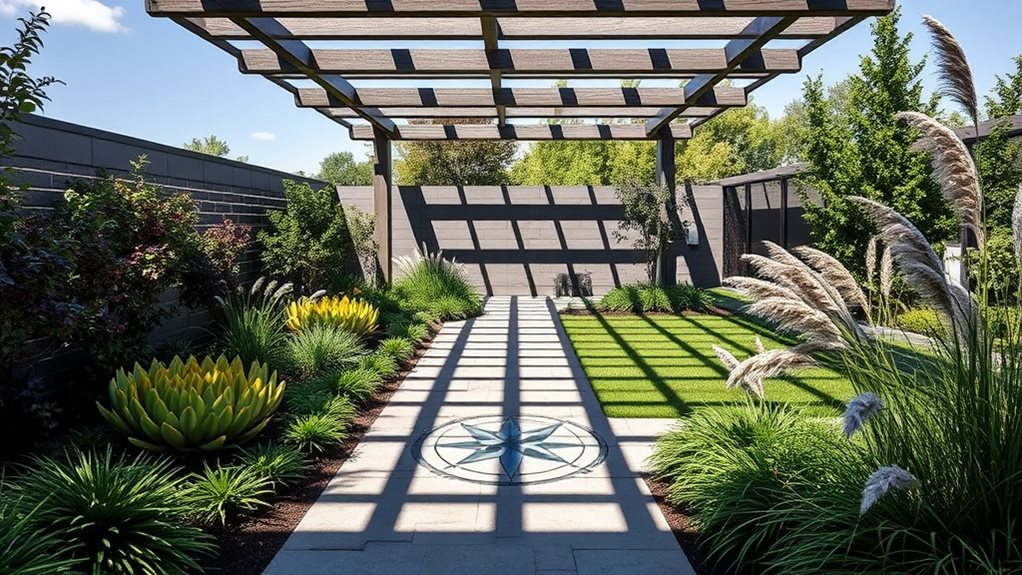
You’ll need to analyze your site’s unique sunlight and shadow patterns to create successful microclimates for both plants and people. Start by tracking sun movement throughout the day using digital modeling tools or sun path diagrams, then map out areas receiving full sun (6+ hours), partial shade (3-6 hours), and deep shade (<3 hours). Match plants to these specific light conditions – like drought-tolerant lavender in full sun and shade-loving ferns in darker spots. Understanding these patterns will reveal your landscape’s full potential.
Expert Highlights
- Track sun movement throughout the day using digital modeling tools to identify patterns of light and shadow across your site.
- Analyze existing vegetation and structures to understand their impact on shade distribution and microclimate conditions.
- Measure sunlight duration in different areas to categorize zones as full sun, partial shade, or deep shade.
- Consider seasonal variations in sun angles when planning plant placement and outdoor living spaces.
- Match plant selections to specific light zones for optimal growth, using sun-tolerant species in exposed areas and shade-loving plants elsewhere.
Microclimate Fundamentals: The Dance of Light and Shadow
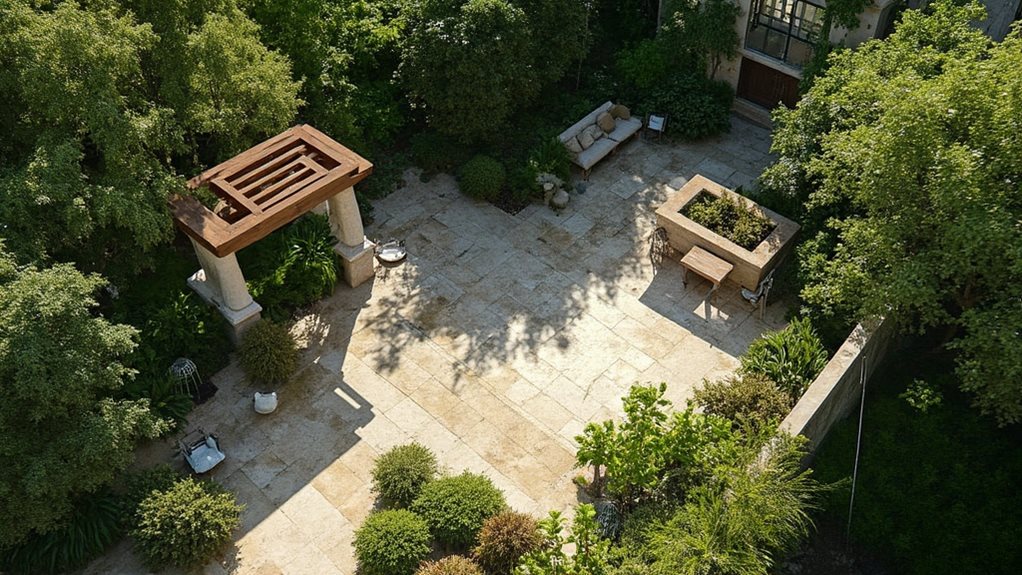
When you’re analyzing microclimates as a landscape architect, understanding the interplay between light and shadow becomes your foundation for creating sustainable outdoor spaces. You’ll need to track how sunlight moves across your site throughout the day and seasons, noting how buildings, trees, and terrain affect light patterns. These patterns directly impact plant health, thermal comfort, and energy efficiency.
Start by mapping shadow projections from existing structures and vegetation, paying close attention to areas that receive full sun, partial shade, or deep shade. You’ll discover that even small changes in elevation or orientation can create distinct microclimates. Consider how materials absorb and reflect heat differently – concrete retains warmth longer than grass, while light-colored surfaces reflect more solar radiation than dark ones.
Tools and Techniques for Shadow Mapping Analysis

Modern landscape architects rely on an array of sophisticated tools to conduct thorough shadow mapping analyses. When you’re evaluating a site’s microclimatic conditions, you’ll need to understand how shadows move throughout the day and across seasons to create ideal designs.
- Digital modeling software like SketchUp and Rhino help you visualize shadow patterns through 3D simulations
- Sun path diagrams enable you to track solar angles and predict seasonal variations in shade coverage
- Light meters measure actual on-site illumination levels to verify your projected calculations
- Geographic Information Systems (GIS) integrate terrain, building heights, and vegetation data for extensive shadow analysis
Seasonal Light Patterns and Their Impact on Design

Understanding seasonal light patterns forms the foundation of successful landscape design, as shifting daylight throughout the year dramatically influences both plant health and human comfort levels. You’ll need to analyze how sunlight moves across your site during different seasons, paying particular attention to the sun’s lower winter angles and higher summer positions.
In winter, when the sun sits lower on the horizon, you’ll want to maximize southern exposure for warmth and light penetration. During summer, you’ll need to factor in shade strategies like deciduous trees or pergolas to protect spaces from intense overhead sun. By mapping these seasonal variations, you can position elements strategically – placing shade gardens where summer shadows fall, and situating patios to capture morning sun while avoiding afternoon heat. This knowledge helps you create spaces that remain comfortable and functional year-round.
Creating Effective Shade Management Strategies
Successful shade management requires a strategic blend of natural and constructed elements to create comfortable outdoor spaces throughout the year. When you’re planning your site’s shade strategy, you’ll need to reflect on both immediate and long-term solutions that adapt to changing conditions.
To maximize the effectiveness of your shade management plan, focus on these key elements:
- Analyze existing vegetation’s shadows throughout different seasons, documenting areas that receive too much or too little shade
- Incorporate deciduous trees strategically to provide summer shade while allowing winter sunlight
- Install adjustable shade structures like retractable awnings or pergolas with movable panels
- Create shade corridors that guide foot traffic through protected pathways, using a combination of vertical gardens and architectural elements
Remember to balance aesthetic appeal with functionality as you implement these solutions, ensuring your design serves both practical and visual purposes.
Optimizing Plant Selection for Different Light Zones
When designing a landscape with varying light conditions, selecting plants that thrive in their designated zones becomes essential for creating a sustainable and visually appealing environment. You’ll need to analyze how sunlight interacts with your space throughout the day and match plants to these specific conditions.
For full-sun areas that receive six or more hours of direct sunlight, you’ll want to choose drought-tolerant species like lavender, black-eyed susans, and salvias. In partial shade zones, which get three to six hours of sun, consider planting hydrangeas, hostas, and coral bells. Deep shade areas receiving less than three hours of direct sunlight require specialized plants like ferns, astilbe, and Japanese forest grass. By carefully matching plants to their ideal light conditions, you’ll create a thriving landscape that requires less maintenance and supports healthy growth year-round.
Frequently Asked Questions
How Do Artificial Light Sources Affect Microclimate Patterns in Landscape Design?
You’ll find artificial lights warm up small areas, alter plant growth patterns, and affect wildlife behavior. They’ll create mini heat islands and can disrupt natural cycles in your landscape design.
What Software Certifications Are Required for Professional Shadow Analysis Work?
You’ll need certifications in software like Ecotect, SketchUp Pro with Shadow Analysis, Revit, and Rhino. Many firms also value AutoCAD Civil 3D and Lumion for professional shadow studies.
Can Microclimate Analysis Help Reduce Energy Costs for Nearby Buildings?
You’ll save on heating and cooling costs when you analyze microclimates properly. Strategic tree placement, wind barriers, and shade patterns can reduce building energy consumption by up to 25%.
How Do Reflective Surfaces From Neighboring Structures Impact Garden Microclimates?
You’ll find that reflective surfaces can dramatically heat up your garden spaces, creating hot spots and increasing water needs. They’ll also intensify light exposure, which affects plant growth patterns.
What Insurance Considerations Should Landscape Architects Have When Conducting Microclimate Assessments?
You’ll need professional liability insurance to cover potential errors in your microclimate assessments, plus general liability coverage to protect against accidents while conducting site visits and taking measurements.
Expert Final Thoughts
As you master the art of analyzing sunlight and shadows in your landscape designs, you’ll create outdoor spaces that work in harmony with nature’s patterns. By mapping seasonal changes, selecting climate-appropriate plants, and implementing strategic shade management, you’re now equipped to design environments that thrive in their unique microclimates. Remember that successful landscape architecture isn’t just about aesthetics – it’s about understanding and working with your site’s natural light dynamics.