
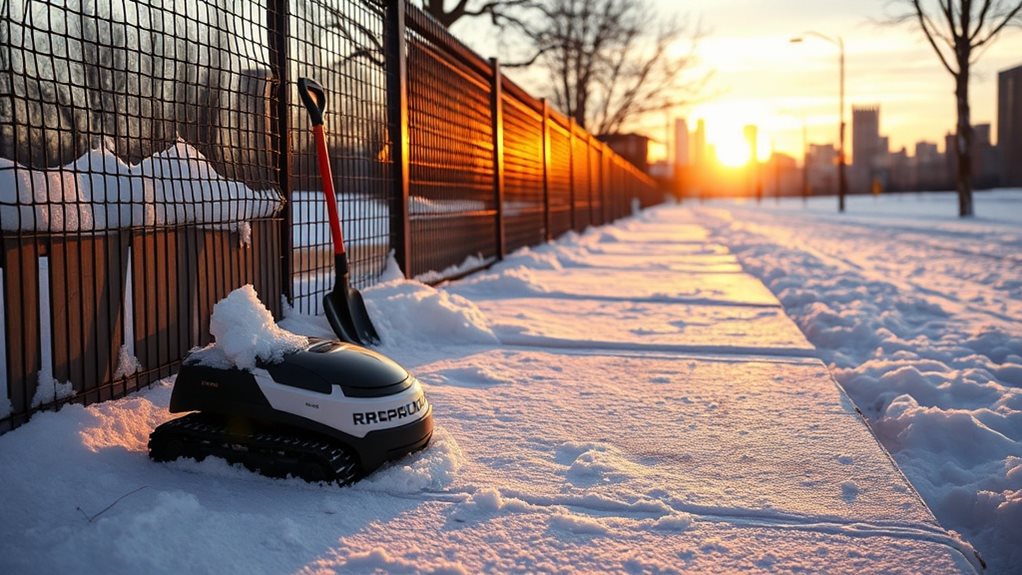
Minneapolis property owners must clear sidewalks within 24 hours of snowfall or face $150+ fines. Effective management requires proper tools: ergonomic shovels ($30-50) for light snow, snow pushers ($40-60) for 2-4 inches, and electric throwers ($150-300) for heavier accumulation. Take 1-2 minute breaks every 10-15 minutes of shoveling, and warm up for 5-10 minutes before starting. Neighborhood cooperatives and hiring local teenagers offer cost-effective solutions when personal clearing isn’t feasible. The following strategies protect both legal compliance and physical wellbeing.
Expert Highlights
- Minneapolis requires sidewalk clearing within 24 hours for homes and 4 hours for commercial properties to avoid $150+ fines.
- Proper snow removal tools vary by need: ergonomic shovels ($30-50), snow pushers ($40-60), or electric throwers ($150-300).
- Warm up for 5-10 minutes before shoveling and maintain proper posture to prevent back injuries.
- Form neighborhood cooperatives to share equipment and create rotation schedules for more efficient snow removal.
- Seniors and disabled residents can apply for the Snow Removal Assistance Program for volunteer help or subsidized services.
Know Your Legal Obligations: Minneapolis Snow Removal Timeline

Every Minneapolis property owner must adhere to specific snow removal timelines established by city ordinances, with violations potentially resulting in costly fines and liability issues. The city requires clearing sidewalks within 24 hours after snowfall ends for single-family homes and duplexes, while apartment buildings and commercial properties face a stricter 4-hour deadline. Failure to comply can lead to initial warnings followed by city-contracted removal at the owner’s expense, often exceeding $150 plus administrative fees.
Residents should monitor weather forecasts and plan accordingly, especially during major snow events when enforcement increases. Creating a snow removal plan before winter begins—whether through personal equipment investment, sharing resources with neighbors, or contracting reliable services—ensures compliance while avoiding the physical strain of last-minute shoveling during extreme conditions.
The Right Tools for Minimal Effort Snow Clearing

Selecting the right snow removal equipment can transform a dreaded winter chore into a manageable task, greatly reducing both time spent and physical strain. Minneapolis residents facing regular snowfall should consider tools that match their property size, physical capabilities, and budget constraints.
| Tool Type | Best For | Approximate Cost |
|---|---|---|
| Ergonomic Snow Shovel | Small areas, light snow | $30-$50 |
| Snow Pusher | Medium walkways, 2-4″ snow | $40-$60 |
| Electric Snow Thrower | Medium areas, up to 8″ | $150-$300 |
| Cordless Snow Blower | Large sidewalks, heavy snow | $300-$600 |
| Ice Melt Spreader | Preventing ice buildup | $25-$70 |
When choosing equipment, consider storage space and maintenance requirements. Many neighborhood hardware stores offer seasonal rentals for occasional heavy snowfalls, providing access to professional-grade equipment without the long-term investment or storage concerns.
Neighborhood Snow Removal Cooperatives: Sharing the Load
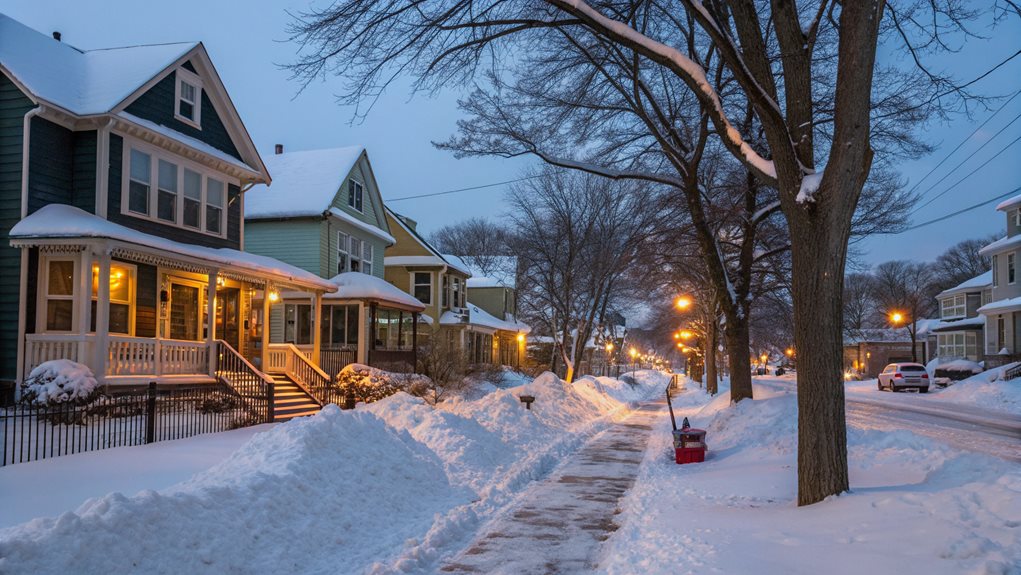
Many Minneapolis residents discover that collaborative snow removal efforts considerably reduce individual burden while strengthening community bonds. These neighborhood cooperatives enable shared responsibility, particularly benefiting elderly or physically limited residents who struggle with Minneapolis’ strict 24-hour snow clearing requirements. Communities establish rotation schedules, equipment sharing systems, and clear communication protocols to guarantee sidewalks remain compliant with city regulations.
- Create a neighborhood text group for coordinating efforts during snowfall events
- Establish an equipment-sharing system where multiple households contribute to purchasing one high-quality snowblower
- Develop a formal rotation schedule with primary and backup volunteers for each snow event
- Consider pooling resources to hire local teens or small service providers during heavy snowfalls
This cooperative approach transforms snow removal from an isolating chore into a community-building activity while guaranteeing regulatory compliance.
Hiring Help Without Breaking the Bank
Although snow removal services can seem prohibitively expensive for many Minneapolis homeowners, strategic approaches to hiring help can make professional assistance surprisingly affordable. Residents facing time constraints or physical limitations can explore several cost-effective options that comply with city regulations while protecting their finances.
Many services offer early-bird discounts of 15-20% for season-long contracts signed before November 1st. Alternatively, forming small neighborhood consortiums of 5-8 adjacent properties can secure bulk-rate discounts, often reducing individual costs by 25-30%. Some companies also provide “on-call only” packages for specific snowfall thresholds, allowing homeowners to handle minor accumulations themselves while ensuring compliance during major storms when the city’s 24-hour clearance deadline becomes challenging. Local retirees and responsible teenagers frequently offer reliable services at half the rate of commercial providers.
Preventative Measures to Minimize Snow Accumulation
Before winter storms arrive, Minneapolis residents can implement several strategic measures to markedly reduce snow accumulation on their sidewalks, potentially decreasing the frequency and intensity of required shoveling throughout the season. Installing snow fencing or strategic landscaping can redirect drifting snow away from critical walkways. When properly positioned, these barriers create wind patterns that deposit snow elsewhere on the property.
Proactive Minneapolis homeowners can significantly reduce winter maintenance by strategically managing snow accumulation before storms hit.
- Apply commercial-grade snow repellent spray to sidewalk surfaces in late fall, creating a hydrophobic barrier that prevents snow from bonding to concrete
- Install heated sidewalk mats or systems in high-traffic areas, melting snow upon contact
- Position temporary windbreaks like burlap screens on the windward side of walkways
- Trim overhanging branches that might deposit additional snow on cleared paths
Physical Techniques to Prevent Injury While Shoveling
Properly executed shoveling techniques can notably reduce the risk of back strain, muscle pulls, and other common injuries that Minneapolis residents face during snow removal. Maintaining a proper stance, with knees bent and back straight, transfers the workload to stronger leg muscles rather than vulnerable back muscles, while taking regular rest breaks prevents overexertion and allows muscles to recover between efforts. Warming up with light stretching for 5-10 minutes before shoveling prepares the body for physical activity, increasing blood flow to muscles and decreasing the likelihood of painful strains that could lead to long-term complications.
Proper Shoveling Stance
The correct shoveling stance serves as the foundation for preventing injuries during snow removal, a task Minneapolis residents must perform throughout winter months. Maintaining proper body mechanics distributes the weight of snow across major muscle groups rather than straining the vulnerable lower back. Minneapolis property owners who neglect this fundamental technique often experience debilitating pain that can persist long after sidewalks are cleared, potentially leading to chronic issues.
- Position feet shoulder-width apart to create a stable base of support
- Bend at the knees rather than the waist, using leg muscles to power lifting motions
- Keep the shovel close to your body when lifting to reduce strain on arm muscles
- Pivot entire body when disposing of snow instead of twisting the spine
Physical therapists recommend practicing these positions before the first snowfall.
Rest Between Efforts
Taking strategic rest breaks during snow removal represents one of the most overlooked yet critical components of safe shoveling practices in Minneapolis winters. Many residents push themselves to complete the task quickly, especially when facing the city’s 24-hour snow clearance requirements, but this approach greatly increases injury risk.
Experts recommend resting for 1-2 minutes after every 10-15 minutes of shoveling. During these breaks, Minneapolis homeowners should stand upright, gently stretch their back, and take several deep breaths to restore oxygen levels. Those with medical conditions should consider even more frequent intervals. A timer set on a smartphone can provide helpful reminders to pause, particularly when the body’s natural fatigue signals become masked by cold temperatures and the urgency to finish before commuting hours.
Warming Up First
Just as rest intervals protect the body during snow removal, preparing muscles before beginning represents a significant defense against injury. Minneapolis residents facing winter’s demands must understand that cold muscles are prone to strains and tears, especially when confronted with heavy, wet snow. A proper warm-up increases blood flow, loosens joints, and prepares the body for the physical stress of shoveling.
- Perform 5-10 minutes of light cardio (marching in place, jumping jacks) to elevate heart rate gradually
- Complete dynamic stretches targeting shoulders, back, and legs—arm circles, gentle twists, and walking lunges
- Simulate shoveling motions with no weight for 30 seconds to rehearse proper form
- Start with smaller loads during the first few minutes of actual shoveling to ease muscles into work
City Resources and Programs for Seniors and Disabled Residents
Minneapolis offers specialized programs and resources designed to assist seniors and disabled residents with sidewalk maintenance requirements. The city’s Snow Removal Assistance Program connects eligible homeowners with volunteer organizations willing to clear walkways after significant snowfall. Residents facing physical limitations can apply through the city’s Neighborhood and Community Relations department, providing documentation of their disability or age-related mobility constraints.
For those with limited financial resources, Minneapolis also offers subsidy programs to offset the cost of hiring professional snow removal services. The application process requires proof of income eligibility and property ownership status. Additionally, the city maintains a referral network of pre-screened, affordable contractors who prioritize service for vulnerable residents during winter months. These contractors must meet specific reliability standards and follow the city’s guidelines for proper snow and ice removal.
What to Do When You’re Cited for Non-Compliance
When Minneapolis property owners receive a citation for non-compliance with sidewalk regulations, understanding the citation process becomes essential for appropriate response. The city provides several appeal options, including requesting a hearing or submitting documentation that demonstrates hardship or extenuating circumstances that prevented compliance. Adhering to the compliance timeline indicated on the citation is particularly important, as delays may result in additional fines, municipal contractors completing the work at the owner’s expense, or potential liens against the property.
Understanding the Citation Process
Receiving a citation for sidewalk non-compliance can feel overwhelming for property owners unfamiliar with Minneapolis municipal procedures. The process typically begins when an inspector documents the violation, resulting in a formal notice delivered by mail. Property owners then have a specific timeframe—usually 24-48 hours depending on weather conditions—to correct the issue before facing potential fines or city intervention at the owner’s expense.
- Citation notices include violation details, required remediation actions, compliance deadline, and contact information for appeals
- Property owners may request an extension by contacting the Public Works department with valid justification
- Appeals must be filed within 10 days and should include supporting documentation or photographs
- Failure to respond to citations escalates the matter, potentially resulting in administrative hearings and liens against the property
Appeal Options Available
Why should property owners accept citation decisions without question when viable appeal options exist within the Minneapolis municipal system? Property owners facing sidewalk violation citations have multiple recourse paths that deserve serious consideration before payment.
The Administrative Hearing Center offers the primary avenue for contesting citations, requiring submission of an appeal application within 10 calendar days of receiving the notice. During hearings, property owners should present compelling evidence such as timestamped photographs, maintenance records, or documentation of extenuating circumstances like medical emergencies or out-of-town travel. The hearing officer may dismiss, reduce, or uphold the fine based on presented evidence.
For unsuccessful administrative appeals, property owners can further pursue their case through the Hennepin County District Court, though this requires filing fees and potentially legal representation for best results.
Compliance Timeline Matters
The precise timeframe for addressing sidewalk violations greatly impacts both financial penalties and potential legal complications for property owners in Minneapolis. When cited for non-compliance, property owners must understand that the city operates on strict timelines that affect resolution outcomes. Failing to respond promptly can escalate a simple citation into a costly municipal intervention.
- Citations typically allow 24-48 hours for snow/ice removal before reassessment
- Property owners may request a one-time extension by contacting 311 before the deadline
- If the city performs the clearing, costs start at $229 plus administrative fees
- Multiple violations within a single winter season trigger escalating penalties and potential special assessments on property taxes
Understanding these timelines enables property owners to prioritize compliance efforts appropriately, potentially saving hundreds of dollars while maintaining neighborhood accessibility standards.
Weather Tracking: Planning Your Snow Removal Strategy
During winter months in Minneapolis, effective snow removal begins well before the first flake falls, requiring property owners to develop a proactive strategy based on accurate weather forecasting. Residents who monitor reliable sources like the National Weather Service or local meteorologists can anticipate snowfall timing and intensity, allowing for better preparation of equipment and resources.
Property owners face significant challenges when caught unprepared, including potential fines, liability issues, and the physical strain of removing accumulated snow. The solution involves establishing a weather monitoring routine using smartphone apps, weather alerts, or local news stations that provide Minneapolis-specific forecasts. Setting up notifications for winter storm warnings guarantees adequate time to arrange for removal assistance if needed, especially during overnight snowfalls that must be cleared by 9 a.m. per city regulations.
Frequently Asked Questions
Can I Use Salt or Chemicals on Sidewalks?
Residents may use salt and chemicals on Minneapolis sidewalks, but eco-friendly alternatives are encouraged. The community benefits when everyone uses minimal amounts to protect pets’ paws and local waterways.
What Happens During Extremely Heavy Snowfalls Exceeding 12 Inches?
During extreme snowfalls exceeding 12 inches, Minneapolis residents still must clear sidewalks, though enforcement may become more lenient. Many neighbors collaborate, sharing equipment and helping elderly community members meet city requirements.
Are Property Owners Responsible for Clearing Bus Stops?
Property owners aren’t responsible for clearing bus stops in Minneapolis. Metro Transit manages snow removal at bus shelters, while the city handles bus stop areas along public sidewalks.
How Do Snow Emergency Routes Affect Sidewalk Clearing Requirements?
Snow emergency routes don’t alter sidewalk clearing requirements. Property owners must still clear adjacent sidewalks within 24 hours after snowfall ends, regardless of whether their property borders a snow emergency route.
Can I Be Held Liable if Someone Falls on My Cleared Sidewalk?
Yes, Minneapolis property owners can still face liability if someone falls on cleared sidewalks, especially if reasonable maintenance wasn’t performed or dangerous conditions were created during the clearing process.
Expert Final Thoughts
Managing Minneapolis sidewalk snow removal combines legal compliance with practical solutions. By understanding city timelines, selecting appropriate tools, and leveraging community resources, residents can maintain safe sidewalks without physical strain or financial burden. Weather monitoring and preventative measures further reduce the workload. For those unable to clear snow themselves, assistance programs provide viable alternatives. With proper planning and knowledge, sidewalk maintenance becomes a manageable responsibility rather than a seasonal hardship.