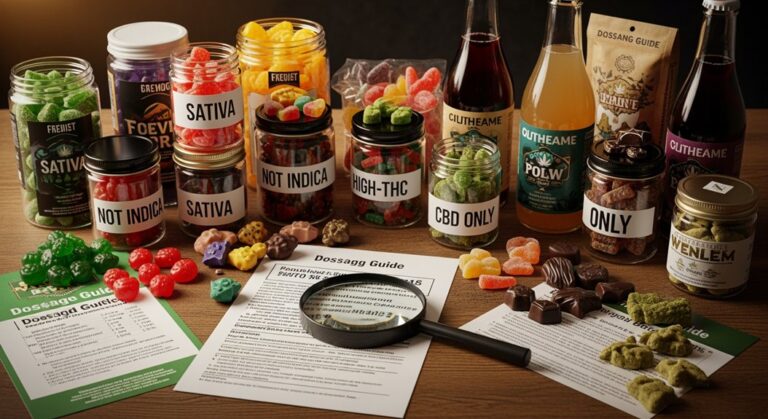

In today’s cannabis market, you’ll find that anything above 15-20% THC is considered high potency. This marks a dramatic increase from historical levels of 1-3% THC found in the 1960s and 1970s. Modern premium cannabis strains can reach up to 30% THC, while concentrates like wax and shatter often test between 60-90%. If you’re new to cannabis, these higher potencies mean you’ll want to understand proper dosing and safety considerations.
Expert Highlights
- For dried cannabis flower, THC levels above 20% are considered high, while anything over 25% is exceptionally potent.
- In concentrates and vape products, THC content above 80% is considered high-potency material.
- Modern cannabis strains commonly contain 15-30% THC, significantly higher than historical levels of 1-3% in the 1960s.
- For edibles, single servings containing more than 50mg THC are typically considered high-dose products.
- Cannabis oils and tinctures with THC concentrations above 50% are regarded as high-potency preparations.
Historical Evolution of THC Levels in Cannabis

While cannabis has been cultivated for thousands of years, THC concentrations have risen dramatically in recent decades.
In the 1960s and 1970s, typical cannabis contained only 1-3% THC. By the 1990s, average potency increased to around 4-5%. Today, you’ll find commercial strains regularly testing at 20-30% THC, with some varieties reaching beyond 35%.
This significant increase stems from advanced breeding techniques, improved growing methods, and market demand for more potent products.
As a caregiver or provider, you should understand that these higher concentrations mean today’s cannabis is fundamentally different from what previous generations experienced.
This evolution has important implications for dosing, tolerance, and potential effects on your patients or clients.
Understanding Modern THC Percentages by Product Type

Because modern cannabis products come in diverse forms, their THC concentrations can vary dramatically.
You’ll find that dried flower typically contains 15-25% THC, while premium strains can reach up to 30%. Concentrates like wax, shatter, and live resin often test between 60-90% THC.
Cannabis oils and tinctures generally range from 30-70% THC, depending on the extraction method and intended use.
Edibles are measured differently, with THC content listed in milligrams per serving, usually between 5-100mg. Vape cartridges commonly contain 60-90% THC, similar to concentrates.
When serving others, it’s essential to understand these variations to provide appropriate guidance, especially for those new to cannabis or seeking specific therapeutic effects.
Factors That Influence THC Potency

Several key factors determine the final THC potency in cannabis products.
Growing conditions, including light exposure, soil quality, and nutrient levels, greatly impact a plant’s THC development. The genetics of the cannabis strain play an essential role, as different varieties naturally produce varying THC levels.
Harvest timing affects potency, as THC concentrations peak during specific phases of plant maturity.
Processing methods, such as proper drying and curing techniques, help preserve THC content. For manufactured products, extraction methods and processing temperatures can either maintain or degrade THC levels.
Storage conditions also influence potency over time.
You’ll want to protect products from light, heat, and oxygen exposure, as these elements can break down THC compounds. Proper packaging and temperature control help maintain the intended potency levels for your customers.
The Science Behind THC Measurement
Testing and measuring THC content relies on three primary laboratory methods: chromatography, spectrometry, and genetic analysis. Gas or liquid chromatography separates cannabis compounds to identify THC concentrations, while mass spectrometry determines the exact molecular composition of these compounds. Genetic analysis examines DNA markers that influence THC production.
You’ll find that certified labs use calibrated equipment and strict protocols to guarantee accurate results. They measure THC content as a percentage of dry weight, typically expressed as milligrams of THC per gram of cannabis.
Modern testing can detect THC levels with precision down to 0.1%. When you’re reviewing lab results, you’ll notice they include both THC and THCA values, which together represent the total potential THC content of the sample.
Safety Considerations for High-THC Products
When consuming products with high THC concentrations, you’ll need to exercise extra caution to prevent adverse effects. Start with a small dose and wait at least two hours before considering more, as high-THC products can have delayed onset times.
Keep these products securely stored away from children and pets in clearly labeled, childproof containers.
If you’re serving others, always inform them about the product’s potency and recommend they start with minimal amounts.
Watch for signs of overconsumption like anxiety, rapid heartbeat, or disorientation.
Have a plan in place for managing adverse reactions, including keeping CBD products on hand, which may help counteract THC’s effects.
Never mix high-THC products with alcohol or other substances, and guarantee you’re in a safe, comfortable environment when using them.
Expert Final Thougts
When you’re considering THC content, remember that today’s standards are quite different from historical ones. You’ll typically find that anything above 20% THC is considered high for flower, while concentrates can range from 60-90%. Don’t forget that higher isn’t always better – your tolerance, experience level, and personal needs should guide your choice more than just THC percentages.