
Concrete driveways come in three primary finish types: brushed, polished, and stamped. Brushed concrete offers excellent slip resistance and minimal maintenance requirements, while polished concrete delivers a sophisticated, smooth aesthetic achieved through mechanical grinding. Stamped concrete provides decorative versatility by replicating brick, stone, or tile patterns with custom textures and personalized accents. Each finish type requires specific maintenance schedules, with costs ranging from $0.50 to $3.00 per square foot, and their long-term value varies based on climate exposure and installation quality.
Expert Highlights
- Brushed concrete driveways offer excellent slip resistance and minimal maintenance, making them the most popular and cost-effective choice.
- Polished concrete creates a smooth, reflective finish with superior stain resistance but requires more frequent maintenance and higher costs.
- Stamped concrete replicates brick, stone, or tile patterns, providing decorative versatility and increasing property values by 5-7%.
- Brushed concrete maintenance costs $0.50-$1.00 per square foot, while polished and stamped require $1.50-$3.00 per square foot.
- All three types need periodic resealing: brushed and stamped every 2-3 years, polished every 4-5 years for optimal performance.
Understanding Different Concrete Driveway Finishes
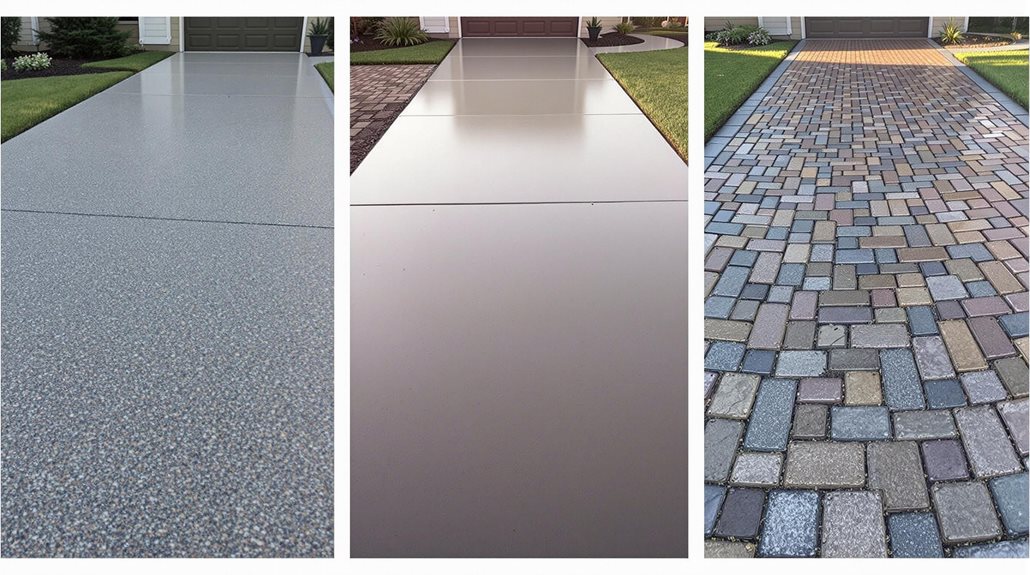
When homeowners consider installing a concrete driveway, understanding the available finish options becomes essential for both aesthetic appeal and functional performance. The selection process involves evaluating several common finishes, including brushed, stamped, exposed aggregate, and polished surfaces, each offering distinct characteristics and benefits.
Brushed finishes, created by drawing specialized brooms across fresh concrete, provide excellent slip resistance and remain the most widely chosen option among residential installations.
Stamped concrete, which replicates the appearance of brick, stone, or tile through patterned molds, offers decorative versatility while maintaining durability.
Exposed aggregate finishes, achieved by washing away surface cement to reveal underlying stones, deliver superior traction and visual interest.
Polished concrete, though less common in driveways, provides a smooth, modern aesthetic through mechanical grinding and densifying processes.
With proper maintenance, these finishes can last up to 30 years while retaining their appearance and functionality.
Benefits of Brushed Concrete Driveways
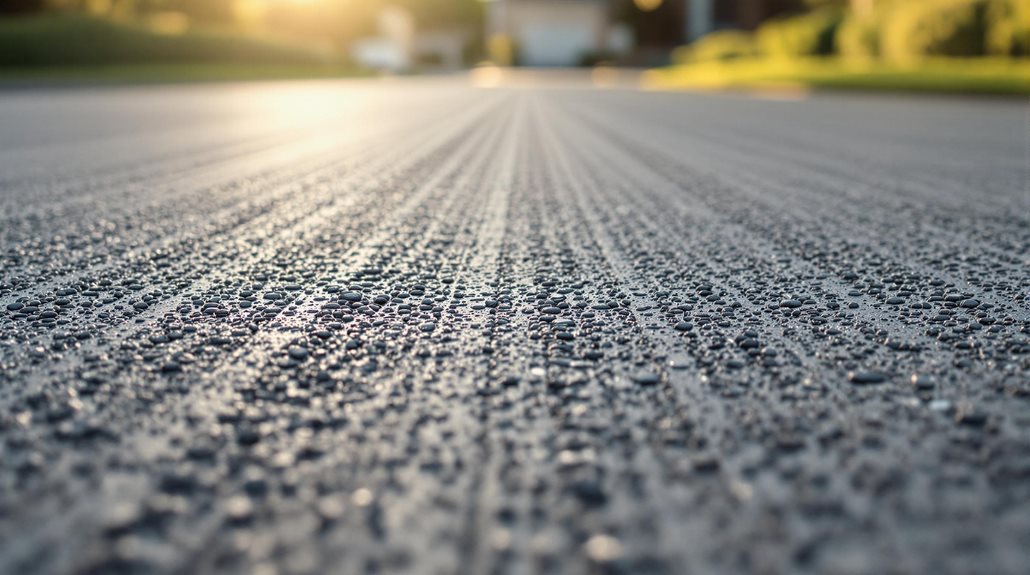
Brushed concrete driveways represent one of the most practical and cost-effective options available to homeowners, offering a compelling combination of safety features, durability, and aesthetic appeal.
For modern homes, brushed concrete driveways deliver unmatched practicality, combining essential safety measures with lasting beauty and value.
The textured surface, created through systematic brushing while the concrete is still wet, provides superior traction in wet conditions and helps prevent dangerous slips and falls.
The brushed finish requires minimal maintenance compared to other decorative options, typically lasting 25-30 years with proper care, while resisting common issues such as cracking and surface deterioration.
Additionally, the linear patterns created by brushing help disguise minor imperfections and stains that develop over time, maintaining a clean appearance throughout the seasons.
The standardized appearance of brushed concrete also guarantees compliance with most homeowner association guidelines, making it an ideal choice for planned communities and suburban developments.
Working with certified concrete experts ensures proper installation techniques including control joints and curing times for optimal durability.
Advantages of Polished Concrete Surfaces
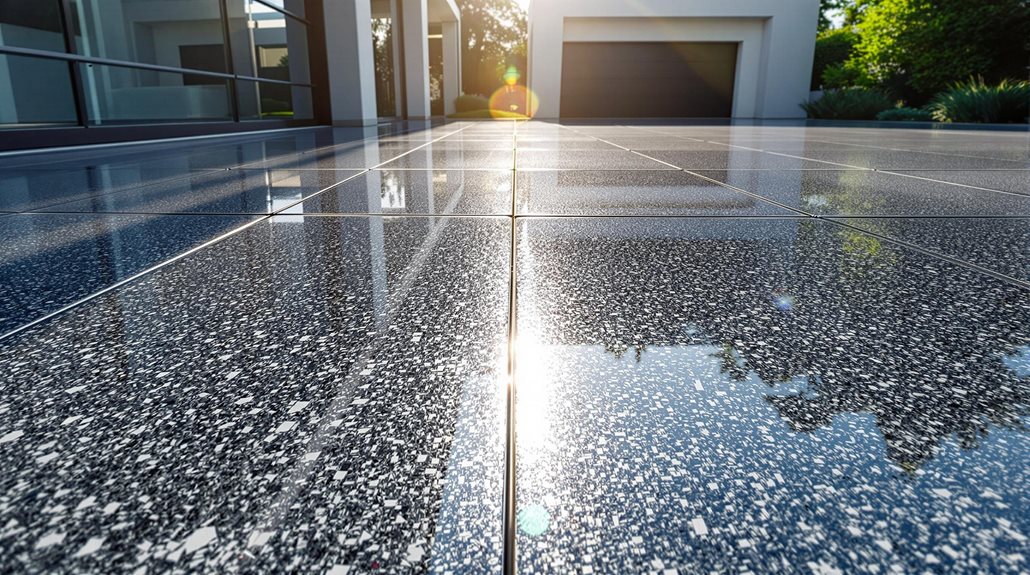
Polished concrete surfaces deliver a sophisticated aesthetic appeal while offering exceptional durability and cost-effectiveness for residential driveways.
The mechanical grinding and polishing process creates a smooth, reflective finish that enhances the natural beauty of concrete’s aggregate composition.
The densified surface demonstrates superior resistance to staining, moisture penetration, and freeze-thaw damage, extending the driveway’s lifespan considerably.
With proper maintenance, polished concrete can maintain its luster for 20+ years, requiring only periodic cleaning with pH-neutral solutions.
Energy efficiency represents another key advantage, as the reflective surface reduces heat absorption and lighting requirements.
The non-porous finish eliminates common issues like efflorescence and prevents the growth of mold or mildew, making polished concrete an ideal choice for homeowners seeking both elegance and practicality.
While different from stamped concrete finishes, polished surfaces provide comparable durability with a projected lifespan exceeding 25 years when properly maintained.
Exploring Stamped Concrete Design Options
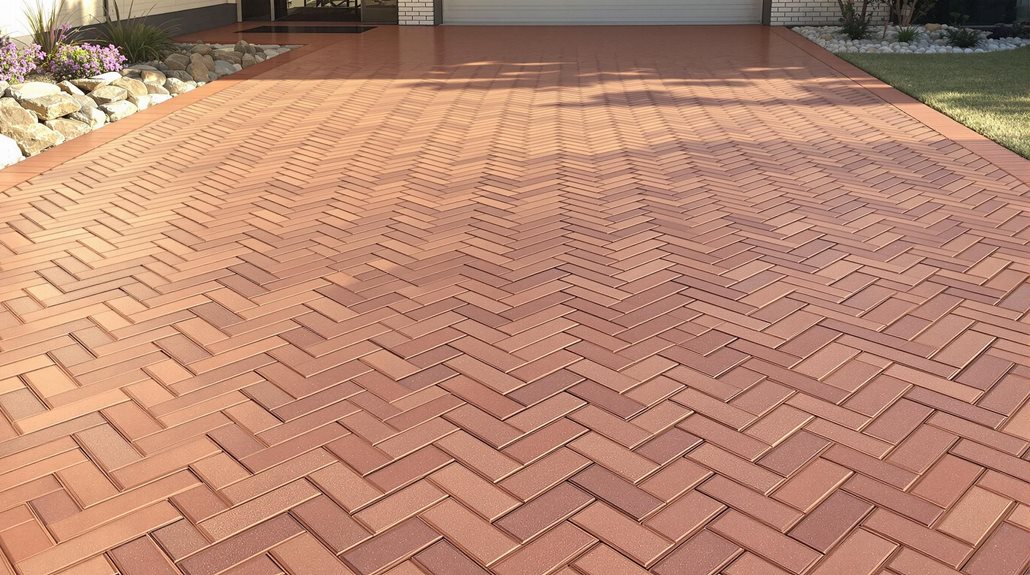
Stamped concrete installations offer homeowners an extensive palette of design possibilities, ranging from natural stone patterns to intricate geometric motifs that can dramatically transform an ordinary driveway into an architectural focal point.
The stamping process utilizes specialized tools and molds to create textures and patterns in freshly poured concrete, allowing for customization that complements existing landscaping and architectural elements.
Common stamped concrete design options include:
- Slate and flagstone patterns that mimic natural stone formations
- Traditional brick or cobblestone layouts for classic curb appeal
- Wood plank textures that provide a rustic, natural appearance
- Seamless Italian slate designs for contemporary aesthetics
- Custom medallions and borders for personalized accents
The versatility of stamped concrete enables property owners to achieve high-end looks while maintaining durability and structural integrity throughout varying weather conditions and regular vehicle traffic.
Maintenance and Care for Each Finish Type
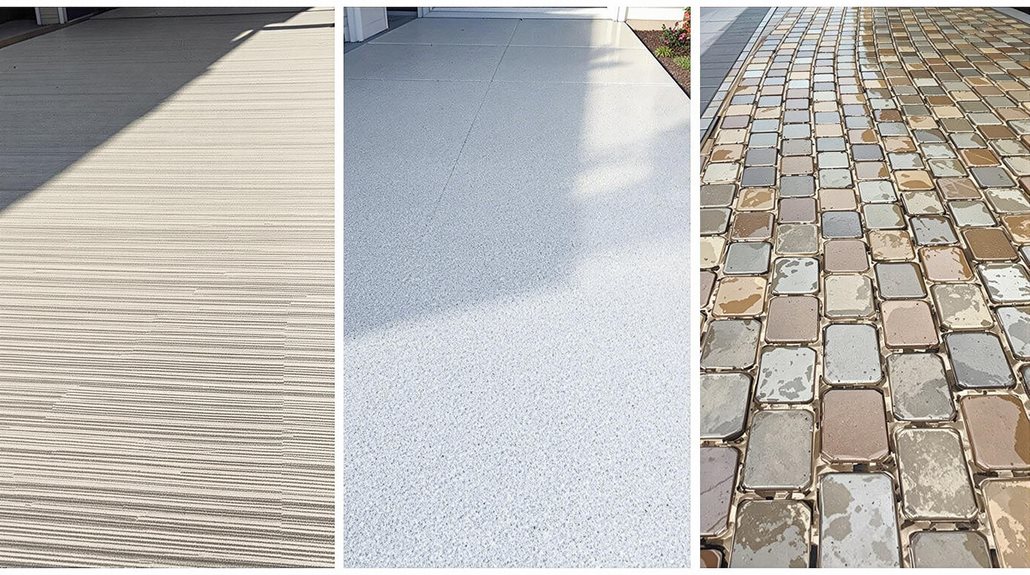
To guarantee the longevity and aesthetic appeal of concrete driveways, each finishing technique requires its own specific maintenance protocol, with care requirements varying considerably based on surface texture, sealant type, and environmental exposure.
Brushed concrete surfaces demand regular sweeping and annual pressure washing, while periodic resealing every 2-3 years helps prevent moisture penetration and surface deterioration.
Polished concrete finishes require monthly cleaning with pH-neutral cleaners and annual mechanical buffing to maintain their glossy appearance, along with resealing every 4-5 years.
Stamped concrete surfaces need the most intensive care, including biannual cleaning with specialized concrete cleaners, prompt stain removal, and resealing every 2-3 years to protect the detailed patterns and coloring agents.
Additionally, these surfaces should be inspected regularly for crack formation, particularly in regions with freeze-thaw cycles.
Cost Comparison of Driveway Finishes
The cost comparison of concrete driveway finishes reveals significant variations in both upfront expenses and long-term financial implications. Plain concrete typically starts at $6-8 per square foot, while decorative finishes can range from $12-30 per square foot.
Regular maintenance costs over a driveway’s lifetime must be factored into the total investment, including periodic sealing, repairs, and specialized cleaning requirements specific to each finish type.
When evaluating long-term value, homeowners should consider how different finishes affect property value appreciation, durability against climate conditions, and potential replacement timelines, which can vary from 20-50 years depending on the chosen finish and installation quality.
Initial Installation Expenses
Initial costs for concrete driveway finishes can vary dramatically based on design complexity, material quality, and installation requirements. Industry data shows that basic brushed concrete typically ranges from $6 to $12 per square foot, while more elaborate finishes command premium prices.
- Standard brushed concrete: $6-12 per square foot installed
- Colored concrete with basic patterns: $12-18 per square foot
- Stamped concrete with single patterns: $12-16 per square foot
- Premium stamped designs with multiple colors: $15-30 per square foot
- Custom polished concrete with decorative aggregates: $20-40 per square foot
Homeowners should consider that higher initial investments in premium finishes often translate to enhanced curb appeal and potentially increased property values.
Installation expenses typically include base preparation, reinforcement materials, concrete mixture, finishing labor, and sealing applications, with regional variations affecting final costs markedly.
Maintenance Cost Analysis
Maintaining concrete driveways requires varying levels of financial investment depending on the specific finish type and environmental conditions, with annual maintenance costs ranging from $0.50 to $3.00 per square foot.
| Finish Type | Annual Maintenance Cost per sq ft |
|---|---|
| Brushed | $0.50 – $1.00 |
| Plain | $0.75 – $1.25 |
| Exposed | $1.00 – $1.75 |
| Polished | $1.50 – $2.25 |
| Stamped | $2.00 – $3.00 |
The higher maintenance costs associated with decorative finishes like stamped and polished concrete reflect the additional treatments required to preserve their aesthetic appeal, including periodic resealing, color restoration, and surface repairs. Basic finishes, such as brushed concrete, generally require only routine cleaning and occasional crack repair, making them more economical to maintain over time.
Long-Term Value Assessment
While annual maintenance costs provide important short-term budget insights, thorough long-term value assessment reveals considerable differences in total ownership expenses across concrete driveway finishes over their expected lifespans.
When comparing brushed, polished, and stamped concrete driveways over a 20-year period, several factors influence their overall financial performance.
- Brushed concrete typically delivers the highest return on investment, with minimal maintenance requirements and a 20-30 year lifespan.
- Polished surfaces command premium resale values but require periodic resealing every 2-3 years.
- Stamped patterns offer enhanced curb appeal, potentially increasing property values by 5-7%.
- Climate exposure impacts deterioration rates, affecting long-term maintenance frequency.
- Installation quality markedly influences durability, with proper curing and reinforcement extending service life by up to 40%.
Understanding these long-term value factors enables property owners to make informed decisions aligned with their investment goals.
Frequently Asked Questions
How Long Should I Wait Before Parking on a Newly Installed Concrete Driveway?
Standard practice recommends waiting at least 7 days before parking passenger vehicles and 28 days for heavier vehicles on newly poured concrete driveways to guarantee proper strength development.
Can Existing Concrete Driveways Be Refinished With a Different Texture or Pattern?
Existing concrete driveways can be refinished with decorative overlays, allowing homeowners to add new textures and patterns. Various techniques like stamping, staining, and resurfacing create fresh, appealing looks for tired surfaces.
Does Salt or Ice Melt Damage Concrete Driveways During Winter Months?
Salt and ice melts can greatly damage concrete surfaces, causing scaling, pitting, and spalling. Using sand or non-chemical alternatives helps homeowners protect their driveways during winter weather conditions.
What Causes Concrete Driveways to Crack, and Can These Cracks Be Prevented?
Concrete cracks commonly result from soil settlement, heavy loads, improper installation, and freeze-thaw cycles. Prevention includes proper base preparation, reinforcement, control joints, and maintaining appropriate moisture during curing.
Are Permits Required for Installing a New Concrete Driveway in Residential Areas?
Most residential areas require permits for new driveway installations. Homeowners should check with their local building department, as requirements and fees vary between municipalities and jurisdictions.
Expert Final Thougts
Concrete driveways offer homeowners distinct aesthetic and functional options through brushed, polished, and stamped finishes, each with specific advantages and maintenance requirements. While brushed concrete provides reliable traction and affordability, polished surfaces deliver sophisticated appeal and durability, and stamped designs allow for creative customization. The choice between these finishes ultimately depends on budget constraints, local climate conditions, and desired visual impact, with all options capable of providing decades of service when properly maintained.